Ideas Having Sex

First published in Flourishing April 2011

In his 1987 classic, The Gift of Fire, Richard Mitchell compared thinking to sex:  “From the point of view of the species, if a species could have a point of view, the great advantage of sexual reproduction is the endless variety of possibilities to which it leads.  Every creature born of sex is absolutely new and unique.  Our thinking, on the other hand, is often amoebic, born only of itself.  If it is to be continually renewed, it needs new seed.” 1 

 In his most recent book,  The Rational Optimist, the geneticist Matt Ridley writes that the “…secret of the modern world is its gigantic connectedness.  Ideas are having sex with other ideas from all over the planet with ever-increasing promiscuity.  The telephone had sex with the computer and spawned the Internet. …The camera pill is an idea that came from a conversation between a gastroenterologist and a guided-missile designer.” 2

Ten thousand years ago, the earth was populated with about 1 million human beings.  Given that the human genome has changed very little (if at all) in the intervening years, it seems likely that those people shared our capacity for creative genius.  But, ice age thought leaders had a couple of problems that, thankfully, we do not share.  First, very few lived beyond the age of twenty, and most of their time and energy were consumed in foraging for food.  And, second, the poor devils rarely had co-workers, business partners, or venture capitalists with whom they could share their best ideas.  They may have been as smart as we are, but they were intellectually amoebic.

With the receding of the ice age came agriculture and more or less permanent community settlements.  As Matt Ridley points out 3, in settling into communities, human beings could specialize and develop a division of labor economy.  This led to the voluntary and mutually beneficial trading of goods and services.  With the expansion of trade, ideas could mate and multiply more readily.  Ideas could finally have sex.

Then, two hundred years ago, with the discovery, mining, and processing of fossil fuels, the stored energy of extinct species began to power the Industrial Revolution that dramatically extended human life expectancies and improved living standards.  Indeed, the decline of slavery owes as much to James Watt and the coal-fired steam engine as to Bishop Wilberforce and Abe Lincoln; and we owe as much to John D. Rockefeller and his entourage of chemists as to Louis Pasteur for our health and longevity.

In the 1950’s, my grandparents’ home west of Valley Center, Kansaswas still endowed with an outdoor, long-drop toilet.  And, I remember when my grandmother’s “crank” telephone and her wood-burning cook stove were in daily use.  Perhaps you recall, as I do, when the coming of electrification to rural Kansaswas a big deal.  But, in 2011, you’re probably “texting” your grandchildren on your Blackberry; or maybe you’re watching your granddaughter play her piccolo in an auditorium halfway across the state, or even across the globe, in real time, on your iPad.  As my Grandma used to say, “Who woulda thunk?” 

Or, who could have imagined—even a decade ago—that Asmaa Mahfouz,  a 26-year-old “Facebook Mom”, sporting a degree in business administration and armed with an iPad, would help lead a revolution to overthrow the Egyptian tyrant, Hosni Mubarak?4   The tools of communication and exchange are growing exponentially, both in efficiency and in their power to effect change.  So omnipresent are the new tools of communication and exchange, that we often forget to take them into account. 

Surely, it’s possible—and I believe it’s inevitable—that we’re currently witnessing the serial extinction of the world’s petro-fascist dinosaurs, as the most liberating ideas of Western Science and Civilization are mating with willing young partners in Egypt, Libya, Tunisia, Bahrain, Saudi Arabia, Lebanon, Syria, Iran, et al.  Ditto, our own andEurope’s Jurassic bureaucracies.

Therefore, I invite you to plant a seed of positive possibility.  What kind of world will it be when today’s crises are forgotten?  When today’s problems are resolved or simply disappear?  When technologies not yet conceived are ubiquitous?  When benevolence and optimism dominate our daily conversations?  mh

 ****************************

  1. The Gift of Fire, Richard Mitchell, Fireside, 1987, p. 172.
  2. The Rational Optimist, Matt Ridley, Harper, 2010, p. 270.
  3. Ridley, p. 352.
  4. 2011 Egyptian Revolution, http://en.wikipedia.org/wiki/2011_Egyptian_Revolution
From Slavery to Significance

Originally published in Flourishing February 2011.

Frederick Augustus Washington Bailey was born a slave in his grandmother’s shack east of Tappers Corner, Maryland in February of 1818.  The exact date of his birth is unknown.  He was separated from his mother, Harriet Bailey, when he was still an infant and lived with his maternal grandmother Betty Bailey. His mother died when he was seven. Like his birthday, the identity of his father is uncertain.

When Frederick was about twelve years old, his master’s wife, Sophia Auld, started teaching him the alphabet, despite the fact that it was against the law in Maryland to teach slaves to read. Frederick later described Sophia as a kind and tender-hearted woman, who treated him like one human being ought to treat another. When Sophia’s husband discovered her activity, he strongly disapproved, saying that if a slave learned to read, he would become dissatisfied with his condition and desire freedom.  Mr. Auld was certainly right about that.

Those remarks made by his master told Frederick that education was his ticket to freedom.  He continued his studies, learning to read from white children in the neighborhood, and by observing the writings of the men with whom he worked.

When Frederick was hired out to William Freeland, he taught other slaves on the Freeland plantation to read the New Testament at a weekly Sunday school. As word spread, the interest among slaves in learning to read was so great that in any given week, more than 40 slaves would attend lessons. For about six months, their study went relatively unnoticed. But, soon enough, area plantation owners became incensed that their slaves were being educated. One Sunday morning they burst into the gathering armed with clubs and stones to disperse Frederick’s congregation permanently.

Later, he was hired out to Edward Covey, who was widely regarded as a “slave breaker”.  He regularly applied a whip to Frederick’s back, until Frederick finally fought back—apparently with some success—as Covey never threatened him again.

On September 3, 1838, Frederick successfully escaped his slave masters by boarding a train to Havre de Grace, Maryland.  He carried identification papers provided by a free black sailor. He crossed the Susquehanna River by ferry at Havre de Grace, then continued by train to Wilmington, Delaware. From there he went by steamboat to Philadelphia.  He arrived in New York City within twenty-four hours of boarding the train to Havre d Grace.  And, soon after arriving in New York, Frederick married Anna Murray, a free black woman he had met in 1837.

As a runaway slave, Frederick continued his studies, and was soon giving lectures on the living conditions, attitudes, and hopes of those still held in bondage.  As a fugitive slave, of course, Frederick’s own freedom and safety were much at risk.  He traveled to England for a time, and there he found sponsors who purchased his freedom from his previous slave masters in Maryland.

Early in his studies, Frederick had been a Constitutional skeptic, but as he continued to grow and learn throughout his life, he came to agree with Lysander Spooner (1808 – 1887), the great American libertarian writer, that the United States Constitution was an anti-slavery document. This reversed his earlier agreement with William Lloyd Garrison (1805 – 1879), another prominent abolitionist, that it was pro-slavery.  Garrison had famously burned a copy of the Constitution in protest of slavery. 

President Lincoln’s Emancipation Proclamation, which took effect on January 1, 1863, declared the freedom of all slaves in Confederate-held territory.  Frederick described his emotions as he waited:

We were waiting and listening as for a bolt from the sky…we were watching…by the dim light of the stars for the dawn of a new day…we were longing for the answer to the agonizing prayers of centuries.1

The Constitutional question of slavery was settled by the post-war (1865) ratification of the 13th Amendment, which outlawed slavery nationwide, the 14th Amendment (1868), which provided for citizenship and equal protection under the law, and the 15th Amendment (1870), which protected all citizens from being discriminated against in voting because of race.  Sadly, it was another hundred years before black Americans in much of the nation would truly be free and equal citizens. 

Yes, Frederick Augustus Washington Bailey became Frederick C. Douglass, the famous American social reformer, orator, writer, and statesman.  (The name Douglass was taken from Sir Walter Scott’s 1810 poem, Lady of the Lake.)  As Frederick C. Douglass, the former slave became famous throughout the world for his glittering oratory and his insightful and inspirational writing.  Frederick C. Douglass was living and irrefutable proof that a black man is fully capable of functioning as a self-possessed, self-actualizing, and self-sustaining American citizen.

At the unveiling of the Emancipation Memorial, during the presidential term of Ulysses S. Grant, Frederick C. Douglass was the keynote speaker:

Can any colored man, or any white man friendly to the freedom of all men, ever forget the night which followed the first day of January 1863, when the world was to see if Abraham Lincoln would prove to be as good as his word?2

The crowd, roused by his speech, which was candid in its assessment of “Honest Abe”, gave Douglass  a standing ovation. Lincoln’s favorite walking stick, given to him by Mrs. Lincoln, still rests in Douglass’ house known as Cedar Hill3, as both a testimony and a tribute to the effect of Douglass’ powerful public speaking.

On February 20, 1895, Frederick C. Douglass, the former slave who was taught the alphabet by his master’s wife, was invited to a meeting of the National Council of Women in Washington, D.C.  During that meeting, he was brought to the platform and given a standing ovation by the audience. Shortly after he returned home, and as he recounted the day’s events to his wife, he died of a massive heart attack.

Today, the legacy of Frederick C. Douglass is still with us. By the example of his life, lived in pursuit of freedom for all people, he literally changed the world.  mh

Biographical information used in this essay was drawn from Wikipedia at http://en.wikipedia.org/wiki/Frederick_Douglass# Life_as_a_slave

1 A Biography of the Life of Frederick Douglass, by Sandra Thomas, http://www.history.rochester.edu/class/douglass/home. html#contents

2 Oration in Memory of Abraham Lincoln, http://www.teaching americanhistory.org/library/index.asp? documentprint=39

3 http://en.wikipedia.org/wiki/Frederick_Douglass_National_ Historic_Site

What’s In a Name

Originally published in Flourishing January 2011.

Fred Harvey was seventeen years old when he arrived in New York City in 1853.  Following his father’s business failure in London, he had left his family and friends to seek his own fortune in the land of milk and honey.  Fred began his business career humbly, as a “pot walloper” in a New York City diner; but while washing dishes, he learned some valuable lessons about business management from his employers.

Hard-working Fred advanced quickly with his employers in New York, and he soon married and had children.  He saved some money and moved his family to St. Louis, where he started a restaurant near the site of the present-day Gateway Arch.  In the 1860’s, St. Louis, like the country itself, was divided over the issue of slavery.  Fred was staunchly anti-slavery, but he wasn’t confrontational; his partner was a Confederate sympathizer.  Fred’s silence offered little protection, however.  His restaurant was burned to the ground during a riot, and his partner skipped town with all their cash.  Uninsured, and just as broke as the day he landed in New York, Fred set out for Leavenworth, Kansas to begin again.  He was twenty-six years old.

In Leavenworth, Fred found a way to put food on the family table, selling advertising for newspapers in cities and towns along the new Santa Fe Railroad.  He had to ride the train a lot, traveling as far east as Chicago, Buffalo, and Boston; and west to Santa Fe.  Fred befriended several senior railroad executives along the way,  impressing them with his work ethic and his honesty.  With his food service background, Fred soon realized that railroad passengers would pay well for good food and courteous service, both of which were in short supply along the Santa Fe line.  His next opportunity was knocking, and Fred was ready.

A part of Fred’s idea was to provide elegant, well-cooked meals for railway passengers in clean restaurants on white tablecloths with napkins cut from white Irish linen.  He hired trained chefs from Chicago, New York, and even from Europe, to prepare the food.  One of his first chefs relocated from Chicago’s Palmer House to tiny Florence, Kansas, and soon became the Fred Harvey food service director all along the Santa Fe line. 

Perhaps Fred’s greatest innovation, though, was the Harvey Girls, who were single young women recruited from good families and good schools.  They were trained in the “Harvey Standard” of service before they were sent west on the rails to their assigned Harvey House restaurants.  From the 1870’s until World War II, Harvey Girls were easily recognized by their clean – that is to say, spotless – starched, black and white uniforms, and they were renowned for their disciplined adherence the “Harvey Standard”.  Fred demanded that discipline, and he enforced it with strict inspections. In return, he respected the girls’ dignity and the risks they were taking.  The young ladies all lived in chaperoned dormitories near their Harvey House restaurants. 

It’s hard to imagine how difficult that innovation was to establish.  That was the era of Billy the Kid, Wild Bill Hickok, Buffalo Bill Cody, and Bat Masterson. There were precious few women in the work force anywhere, let alone in the southwest; but Fred Harvey and the Harvey Girls became a civilizing influence from Kansas City through south central Kansas and Oklahoma to Santa Fe, Albuquerque, and southern California.

Expanding rapidly alongside the Santa Fe rail, Fred Harvey soon owned and managed a small empire. In addition to the Harvey House restaurants, there were classic hotels, a few of which are still in use, and vast cattle ranches in Kansas and New Mexico. By the time Fred Harvey (the man) died in 1901, Fred Harvey (the company) was the most recognized brand in America.  Fred Harvey was Ray Kroc before McDonald’s, Willard Marriott before Marriott Hotels, and Howard Schultz before Starbucks.*

But the story doesn’t end with Fred Harvey’s death. Fred’s oldest son, Ford; Ford’s wife, Judy; and David Benjamin, a key executive in the company, continued to extend the Fred Harvey brand.  There were Fred Harvey newsstands, drug stores, bakeries, soda fountains, and much more.  Fred Harvey owned virtually every Santa Fe depot restaurant from Chicago and St. Louis to southern California. Fred Harvey became the exclusive concession operator for the Union Stations in Kansas City, St. Louis, and Chicago, among others.

After World War II, though, people  traveling to and from the western United States no longer depended on rail service, and it became more difficult for Fred Harvey to maintain a competitive advantage and generate a profit.  Never in debt, the company just slowly ceased its operations, and by the mid 1960’s it was gone. 

One never hears the name Fred Harvey these days.  Though I’m frequently asked whether I’m related to Henry or Paul, no one has ever asked me about my relationship to Fred.  (At least as far back as 1794, I’ve found no familial connection to any of them.)  Yet Fred Harvey not only helped define business in the United States, he helped in no small way to define the United States itself.  To tell the truth, I’m disappointed that I didn’t learn anything at all about Fred Harvey in school!

And that brings me to the point of this little essay: You really should read Appetite for America, by Stephen Fried, published by Bantam in 2010.  It is a masterfully researched history of Fred Harvey—the man, the company he created, his family—and the development of the American southwest from before the Civil War to the end of World War II. 

Under Stephen Fried’s caring hand, the taming of the wild, wild, west becomes a series of lessons in business strategies and practices, old world courtesies, historic preservation of native artifacts, environmental awareness, architectural innovation, and family and business continuity across multiple generations. Appetite for America is the story of America becoming America; a paean to America’s entrepreneurial soul—and implicitly, at least—a conduit connecting America’s past with its future.

You will appreciate, too, that there are almost one hundred pages of appendices and notes. These include a tour of the Harvey sites that still exist. You’ll even find recipes for food served at the Harvey House restaurants. You might want to try one of Harry and Bess Truman’s favorites, Cream of Wisconsin Cheese Soup.  I think you will just love Appetite for America. mh

* Appetite for America, by Stephen Fried, Bantam, 2010, from the author’s introduction.

10th Annual Legacy Thanksgiving Banquet

Originally published in Flourishing December 2010.

Legacy: a Regional Community Foundation is a public charity established in 1996 by local people to meet a wide variety of charitable needs.  Shortly after its founding, I was invited by the founders to suggest ways to help the foundation grow. You know I’m a slow study, so it took a while.

But, during a staff meeting in the early months of 2001, it occurred to me that we could help the foundation by sponsoring a public event. I met with Legacy’s Executive Director, Pam Moore, and we decided to have a Thanksgiving celebration.  Our objective was raise $300,000 by the end of that year to qualify for a matching grant from the Kansas Health Foundation.  We invited KAKE News Anchor and Winfield native, Larry Hatteberg, to keynote that inaugural event. Larry was magnificent!

That first Legacy Thanksgiving Banquet was so successful, we decided to make it an annual event.  On November 18 of this year we were proud to sponsor the 10th Annual Legacy Thanksgiving Banquet. During the past ten years, Legacy has increased its endowed and operational funds by a factor of more than ten.  The credit for that, of course, is not ours, but we are immensely proud to be a contributor to Legacy’s growth, and we’re looking forward to at least another ten years.

In addition to Larry Hatteberg, our keynote speakers in past years have included Kansas native and A&E producer, Bill Kurtis, Inc. Magazine “Entrepreneur of the Year-2004”, Jack Schultz, and highly acclaimed Kansas historian, Craig Miner.  This year, we were very pleased to have David Rebein, a well-known victims’ advocate from Dodge City, who spoke about living a passionate life.

David is one of seven farm-family brothers.  He credits the famous television show, Perry Mason, for igniting his passion for the practice of law.  David shared several instances of courtroom drama that were illustrative of his conversion from defending corporate clients to his passion for seeing that right be done.  David didn’t just talk about his passion, it was on display.

We were also quite proud this year to feature the very talented Sarah Stevens, who performed a medley of Aaron Copeland’s most popular works.  Sarah was accompanied on the piano by Southwestern College student, Joanna Woon.

Pam Moore, and Legacy’s current board president, Marcia Stultz, also spoke to the group, and displayed a regional map showing the names and locations of the foundation’s 2010 grant recipients. mh

Your Personality is Important, Pass It On

Originally published in Flourishing December 2010.

You have things in your home that are important to you, not just for their tangible value, but for their intangible or symbolic value, for the memories attached to them, the stories, too, perhaps.

In my case, I have pictures and letters dating back to the mid-19th century and a dictionary owned by my mother’s grandfather. They have no monetary value, but I have in my mind the stories that my mother shared with me. I know those people. I understand who they were and, more importantly, they’ve provided me with insights into the person I am.

I have evidence of our children’s and grandchildren’s childhood creativity and achievements, their school pictures, and much more. Someday, I think and hope, they’ll appreciate the love that Linda has put into preserving the spirit of their youth. They, too, may gain insight into the development of their own personalities and interests.

I have a ring that belonged to my father’s mother. Violet Nestelrode Harvey died in 1924, when my father was just six years old. I have pictures of her, too. I cherish these things, because I can see that she was a loving and caring mother, profoundly missed by my father and his two younger brothers, Forrest and George. I can now understand the effect her premature death had on their lives and their personalities, and they on mine.

As I approach my dotage, all these things are more treasured than ever, and someday, I believe, they’ll be treasured by others who share my lineage. All have a story attached to them. My siblings and I have taken it as our responsibility to preserve those stories, as well as the artifacts, for the people we must someday leave behind. We’re working on that right now.

Let me ask you: What are those treasured things in your life, and what meaning or story is associated with them? What is the most significant object or heirloom that was given to you by a child, a parent, your spouse, or an ancestor? Did the person who gave you this object or heirloom tell you a story about that item? Can you—will you—share a story of remembrance or gratitude with those who will inherit these things from you?

Can you—will you—share your personality with those members of your family who will otherwise never know you? Do it for them. It will, I promise, bring new joy and understanding into your own life. mh

7 Lessons for My Grandchildren

Originally published in Flourishing October 2010.

My grandchildren are back in school. Their preparations have moved me to consider what they should learn. Here are seven lessons that come to mind:

First, everyone should study the lives of George Washington and Mohandas Gandhi. Both were men of self-made character, and each won the unfailing loyalty of his followers by his willingness to accept responsibility for being a grown-up. Each was willing to speak truth to power. Each was willing to act in accordance with his most deeply held beliefs. Each led the way to free minds and free markets.

Second, learn to use a dictionary, and develop the habit of defining your terms. Demand that others define theirs. “What do I (you) mean when I (you) say______?” The answers may surprise you, and, at a minimum, give you the advantage of knowing what you’re talking about (hearing).

Respect boundaries, including your own. That’s lesson number three. Everything belongs to somebody. Everyone’s life, time, and property are his own – families, friends, gangs, and governments, notwithstanding. Sharing and trading, certainly – but always by mutual consent; never initiate the use of force.

Actions have consequences. That’s lesson four, and its corollary is: There is a reason for everything.

Lesson five: You never have “nothing to do”. Wasted time is premature death. Think back to your best day, and strive to live at that level or higher every day from now on.

Lesson six: Help the deserving – and be deserving of help.

Lesson seven: Have a mighty purpose and set meaningful goals. If someone tells you he has no purpose, no goals, no struggles, and no worries – check his pulse. He’s a dead man walking. Tell him, “Here’s a goal for you: Earn my respect! Or better yet, earn your own respect!”

These lessons are not all-inclusive. They are a start and possibly a life’s work for those who want to reach their fullest potential. Oh! I just thought of another lesson, and I’d better get to it: Don’t tell, show! mh

Ad Astra Per Aspera

Originally published in Flourishing September 2007.

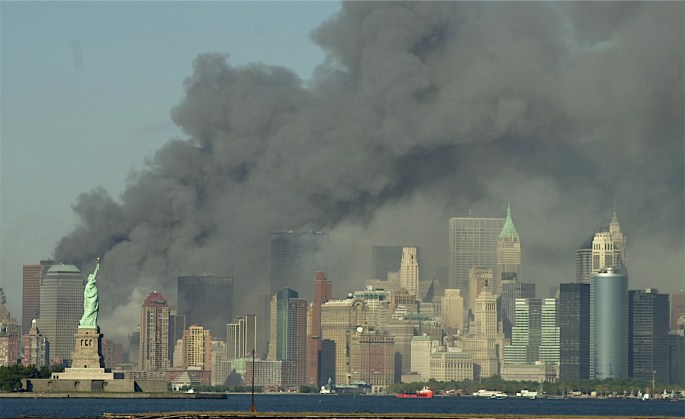
It has been six years since Islamic terrorist hijackers flew two commercial jetliners into the World Trade Center towers in New York City, and another into The Pentagon.  They were thwarted by heroic passengers in their attempt to fly a fourth jetliner into the U.S. Capital Dome.  We must never forget that day.  We must never be deterred in seeking justice, I, for one, will never forgive.  But, that’s not the point of this article.

The day after those inexcusable attacks, I placed an ad in the Winfield Courier urging investors to maintain their poise and to keep faith with the future.  In that ad, I quoted Thomas Paine, the voice of The American Revolution:

These are the times that try men’s souls:  The summer soldier and the sunshine patriot will, in this crisis, shrink from the service of his country; but he that stands it NOW, deserves the love and thanks of man and woman.

Panic is not a strategy, and pig-headed persistence in the face of difficulty is a virtue.

In the intervening six years, our nation has made deliberate, if excruciatingly slow, progress in the effort to defeat Al-Qaeda and related Islamic terror organizations.  In that effort, I am merely a spectator with a powerful vested interest in the outcome.  My real passion, though, and what I am compensated for—by you and people like you—is helping people achieve progressively greater goals over the entire course of their lifetimes.  I am very proud to say that in the aftermath of 9/11, our clients did not shrink from their goals or undermine their own strategic interests.  Like Washington’s army, they continued to march steadfastly in the direction of their dreams.

What has been the reward for their faith in the future?

America’s economy is still the world’s strongest and most resilient.  American markets are still the deepest, best capitalized, and most transparent in the world.  Since September 11, 2001, real (inflation adjusted) Gross Domestic Product (GDP) has risen by more than 16%—$1.65 trillion.  American business has produced twenty-three consecutive quarters of economic growth.  As Larry Kudlow recently pointed out, the U.S. economy has added the equivalent GDP of five Saudi Arabias, eight Irans, thirteen Pakistans, or fifteen Egypts.

Real (inflation-adjusted) annual after-tax income is up more than $2400 per person, the national unemployment rate has fallen from 5.7% to 4.6%, and at last check, continues to fall in thirty-two of the fifty states.  Housing construction—as who could not know—has fallen on hard times, but the median price of an existing home in America is still 45% higher than it was six years ago.

Take note, Osama bin Laden:

By your sponsorship of those evil acts six years ago, you tried to bring the American economy to its knees, and to destroy our way of life.  You failed.

Since 9/11, total after-tax profits in the United States are up 104%.  The Dow Jones Industrial Average is up 39%, the S&P 500 Index is up 33%, and the Nasdaq Composite Index is up 51%.  The Freedom Tower is rising to celebrate the benevolent and resourceful spirit of America.  America:  The land of the free and the home of the brave, and the engine of the Global Capitalist Revolution.  We take pride in knowing that success is the best revenge—you cold, cringing, degenerate bastard!

Have all of our challenges disappeared?

No, of course not!  The war on terror grinds on.  The credit markets are re-pricing risk, correcting a too loose monetary policy by the Federal Reserve.  Oil prices have skyrocketed.  Politicians still do stupid thins and then lie.  It is certain that tomorrow, we will be confronted with new and unexpected challenges.  But, come what may, let us not be summer soldiers in the service of our dreams.  Let us not change who we are in the land of the free and the home of the brave.  We are proud Americans

Ad Astra per Aspera!  mh

Sharing Abundance

Originally published in Flourishing October 2007.

In the summer of 2001, Legacy, A Regional Community Foundation was in its earliest stages of growth.  The organization needed to raise $300,000 to win a grant from the Kansas Health Foundation to permanently fund its operating budget.  Executive Director, Pam Moore, and the foundation’s board of directors had a vision.  These were people who believed they could make a difference, and I was energized by the opportunity to be involved in this ground-floor opportunity.

So, in November 2001, Family Wealth Management sponsored the first annual ‘Legacy Thanksgiving Banquet’.  We invited KAKE 10 News Director, Larry Hatteberg, to be our keynote speaker.  Larry graciously accepted our invitation—donating both his knowledge and time.  We invited everyone we knew to share in our enthusiasm.  Knowing Winfield, I was not surprised by the response:  The Baden Square Community Room was filled beyond capacity.  With the help of the Winfield Courier and radio station KSOK, Legacy’s message reverberated throughout the community.  Within forty-five days of that first banquet, Legacy had a permanent operating fund of more than $600,000. 

Now, six years later, Legacy is faithfully living out the vision of its founders.  Continuing to forge cooperative relationships with deep-pocketed outside interests, Legacy has brought in more than one million dollars from those interests in only six years.  The Kansas Health Foundation has provided $500,000 for community donor support programs and for funding of local projects, and furnished $200,000 for local leadership development programs.  The Kaufman Foundation bestowed $100,000 for creating and maintaining a youth philanthropy board—Kids Impact Cowley County.  The Kellogg Foundation granted $80,000 to explore rural economic development opportunities.  The United Methodist Health Ministries Fund conferred $95,000 for the ‘Tiny Teeth’ oral health program.  Clearly, Pam and her board are doing something right.

Here at home, Legacy Regional Community Foundation is an essential, proactive partner with other local non-profit organizations.  Legacy is working with Leadership Cowley County, Vision 20/20, Tiny Teeth Oral Health Initiative, Non-Profit Chamber Council, Cowley First Economic Development, Arkansas City Public Education Fund, the Kansas Community Development Initiative, and with Chamber of Commerce offices in Burden, Arkansas City, and Winfield.

Today, local donors and volunteers are using Legacy’s charitable planning expertise to support organizations and programs that enrich our communities.  Indeed, as of September 27, 2007, Legacy is managing thirty-nine endowed (permanent) funds, each with its own purpose, totaling $2,200,126.  Since that first banquet six years ago, Legacy has distributed $809,711 in grants, benefiting the citizens of Cowley, Chautauqua, and Sumner counties.  One of those endowed funds, Promises to Keep, is funded in its entirety by ticket sales for the annual ‘Legacy Thanksgiving Banquet’, benefiting local seniors.

As citizens, donors, and volunteers, we know that the future of our communities depends upon what we do today.  Our communities’ needs are great and our opportunities are grand.  So, it seems almost providential that Legacy is making it possible for each of us to bring out knowledge of community needs and our distinctive visions of the future together in one place—locally managed and controlled—where we can put our time and money to work in ways that no profit-making enterprise or government entity can match.

Please note that this year’s (2007) ‘Legacy Thanksgiving Banquet’ will be held on November 15, again in the Baden Square Community Room.  Our keynote speaker will be Denise Unruh of the South Central Community Foundation in Pratt.  Denise will share her experiences of the Greensburg tornado, its aftermath, and recovery.  We know that Greensburg’s tragedy carries important lessons for all of us.  We will also be sharing video presentations of some of the work that Legacy Regional Community Foundation is advancing in our area.  Watch for your invitation, or call us for more information.  mh

Congress and the Fed: Unindicted Co-Conspirators

Originally published in Flourishing November 2008.

In a brazen display of ignorance and/or cynicism, members of the media and virtually every nationally recognized politician have characterized the current credit crisis as a failure of laissez-faire capitalism.  Excuse me?  This crisis was created by the Federal Reserve, aided and abetted by the explicit demands made of the private capital markets by an irresponsible and unrepentant Congress.  An unregulated market would never have tolerated debt-to-equity ratios of 20:1, 30:1, 40:1 or in the case of those government sponsored entities, Fannie and Freddie, 70:1.  It’s plain as the nose on my face:  Take a look at the balance sheets of the best-managed companies in unregulated industries.  You’ll find debt-to-equity ratios in the range of 1:2 or 1:3.  In an unregulated, un-coerced mortgage banking industry, similar ratios would undoubtedly be demanded by shareholders and lenders.

The fact is that job-creation and economic progress depend on private savings, massive private investment in capital goods (plants, tools, and equipment), and innovation; and that these in turn depend on an economically sound banking system and the freedom of businessmen, entrepreneurs, and capitalists to earn high profits and to accumulate great wealth.  None of these depend on “easy money” doled out by the Federal Reserve Banking System or Congress.  Our leaders do not see—or will not admit—that production must precede consumption.  In an attempt to overturn this causal order, they still throw more cheap money at the problem they created with cheap money.  Good luck, boys and girls; for as history and the great economists—from Adam Smith to Ludwig von Mises—have long ago shown, cheap money ultimately begets hyperinflation or deflation or both.

The menacing truth—ignored by the pundits and posers—is that government-mandated credit expansion was never more than the attempt by politicians to gain favor with their contemporary electorate at the expense of tomorrow’s taxpayers.  My economics professor, Dr. George Reisman, calls this “the loot and plunder theory” of economics.  It is the loot and plunder theory—being practiced against every productive and conscientious American—that is responsible for the credit crisis.  mh

Michael Jordan & Oil: The Law of Comparative Advantage

Originally published in Flourishing March/April 2010.

First, consider these facts:*

  • Just 18% of our oil imports come from the Persian Gulf.
  • The US produces 74% of all the energy it consumes.
  • Because only 26% of our energy is imported, only 4.7% of US primary energy comes from the Persian Gulf. (18 x .26 = 4.68)
  • There are 173 net oil importers in the world.  So, if the US quit buying oil on the world market, there would still be 172 net oil importers.
  • Crude oil contains about 18,400 Btu’s per pound.
  • Corn contains about 7,000 Btu’s per pound.
  • Wind-generated electricity may cost more than twice as much to produce as much electricity from plants fired by natural gas, nuclear, or coal.

Now, what is the law of comparative advantage, and why does it matter?

The law was first identified and formulated by the great British economist David Ricardo to explain that international trade and the division of labor are mutually advantageous to two or more countries, even if one is superior to the others in production of virtually any commodity, product, or service.  In fact, the law applies to any situation involving the division of labor.

In his prime, Michael Jordan could play baseball better than 99% of all Americans.  He did, in fact, earn a tidy sum of money playing minor league ball; but just about the same as others with similar ability.  In basketball, though, Michael was the greatest player who ever lived.  In basketball, the skill differential between Michael and the other players was much greater.  As a result, Michael had more fun and made far more money playing basketball than baseball.  Baseball was not hurt by Michael’s absence, and basketball was elevated immeasurably.  That’s the law of comparative advantage.

The countries of the Persian Gulf are the Michael Jordan of oil—they have more oil than any other region of the globe.  But, they don’t have much fresh water or arable land.  In agriculture, they are, at best, minor league.  For the sake of illustration, let’s assume that it costs those countries less than $10 per barrel to extract oil from the ground.  Let’s also assume that producing corn, to whatever extent they might be able to do that, costs them at least $3.50 per bushel.  If, based on world market prices, they can sell corn for $3.50 and oil for $75, their comparative advantage is clearly the production and distribution of oil. 

What about us?  Ignoring the fact that access to many of our own reserves is limited by the government, the United States itself has vast reserves of oil and other fossil fuels.  The costs of bringing oil out of the ground in the U.S. vary widely, but let’s say the range is from $15 per barrel to $200 per barrel.  With a market price of $75 per barrel, at what point does it make economic sense to import oil from the Persian Gulf countries?  The obvious and correct answer is. . .

. . . anytime our cost of production exceeds the market price (in this case $75), we should purchase any additional oil we need—whether from Mexico, Canada, or any other country—in the world market for oil.

Producing oil domestically at a cost greater than that at which we can buy it overseas makes no sense.  Nor do we benefit in the slightest degree from the attempt to attain energy independence via subsidized “alternative energy”.  In either case, we simply increase our own energy costs.  More importantly—like Michael playing baseball—we divert significant capital and human resources from industries where they could be employed more productively.  In my opinion, growing corn for ethanol, instead of for food, is but one glaring example of such misallocation of resources.  The “green jobs” boondoggle is another. 

In sum, I believe it surely is true that we can and should produce a significant supply of energy right here in the U.S., but the law of comparative advantage tells us that the quest for energy independence is a fool’s errand.  mh