Your Personality is Important, Pass It On

Originally published in Flourishing December 2010.

You have things in your home that are important to you, not just for their tangible value, but for their intangible or symbolic value, for the memories attached to them, the stories, too, perhaps.

In my case, I have pictures and letters dating back to the mid-19th century and a dictionary owned by my mother’s grandfather. They have no monetary value, but I have in my mind the stories that my mother shared with me. I know those people. I understand who they were and, more importantly, they’ve provided me with insights into the person I am.

I have evidence of our children’s and grandchildren’s childhood creativity and achievements, their school pictures, and much more. Someday, I think and hope, they’ll appreciate the love that Linda has put into preserving the spirit of their youth. They, too, may gain insight into the development of their own personalities and interests.

I have a ring that belonged to my father’s mother. Violet Nestelrode Harvey died in 1924, when my father was just six years old. I have pictures of her, too. I cherish these things, because I can see that she was a loving and caring mother, profoundly missed by my father and his two younger brothers, Forrest and George. I can now understand the effect her premature death had on their lives and their personalities, and they on mine.

As I approach my dotage, all these things are more treasured than ever, and someday, I believe, they’ll be treasured by others who share my lineage. All have a story attached to them. My siblings and I have taken it as our responsibility to preserve those stories, as well as the artifacts, for the people we must someday leave behind. We’re working on that right now.

Let me ask you: What are those treasured things in your life, and what meaning or story is associated with them? What is the most significant object or heirloom that was given to you by a child, a parent, your spouse, or an ancestor? Did the person who gave you this object or heirloom tell you a story about that item? Can you—will you—share a story of remembrance or gratitude with those who will inherit these things from you?

Can you—will you—share your personality with those members of your family who will otherwise never know you? Do it for them. It will, I promise, bring new joy and understanding into your own life. mh

7 Lessons for My Grandchildren

Originally published in Flourishing October 2010.

My grandchildren are back in school. Their preparations have moved me to consider what they should learn. Here are seven lessons that come to mind:

First, everyone should study the lives of George Washington and Mohandas Gandhi. Both were men of self-made character, and each won the unfailing loyalty of his followers by his willingness to accept responsibility for being a grown-up. Each was willing to speak truth to power. Each was willing to act in accordance with his most deeply held beliefs. Each led the way to free minds and free markets.

Second, learn to use a dictionary, and develop the habit of defining your terms. Demand that others define theirs. “What do I (you) mean when I (you) say______?” The answers may surprise you, and, at a minimum, give you the advantage of knowing what you’re talking about (hearing).

Respect boundaries, including your own. That’s lesson number three. Everything belongs to somebody. Everyone’s life, time, and property are his own – families, friends, gangs, and governments, notwithstanding. Sharing and trading, certainly – but always by mutual consent; never initiate the use of force.

Actions have consequences. That’s lesson four, and its corollary is: There is a reason for everything.

Lesson five: You never have “nothing to do”. Wasted time is premature death. Think back to your best day, and strive to live at that level or higher every day from now on.

Lesson six: Help the deserving – and be deserving of help.

Lesson seven: Have a mighty purpose and set meaningful goals. If someone tells you he has no purpose, no goals, no struggles, and no worries – check his pulse. He’s a dead man walking. Tell him, “Here’s a goal for you: Earn my respect! Or better yet, earn your own respect!”

These lessons are not all-inclusive. They are a start and possibly a life’s work for those who want to reach their fullest potential. Oh! I just thought of another lesson, and I’d better get to it: Don’t tell, show! mh

Ad Astra Per Aspera

Originally published in Flourishing September 2007.

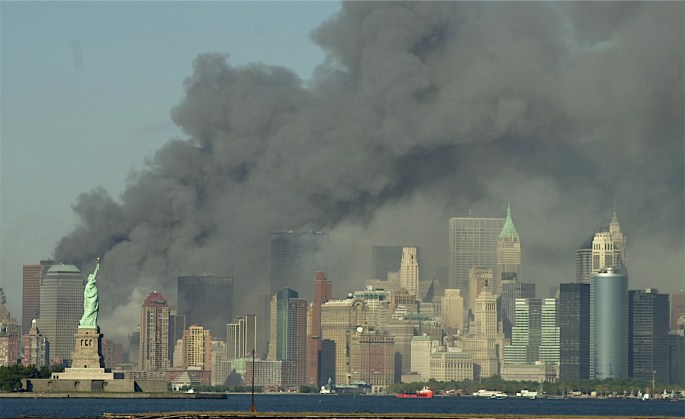
It has been six years since Islamic terrorist hijackers flew two commercial jetliners into the World Trade Center towers in New York City, and another into The Pentagon.  They were thwarted by heroic passengers in their attempt to fly a fourth jetliner into the U.S. Capital Dome.  We must never forget that day.  We must never be deterred in seeking justice, I, for one, will never forgive.  But, that’s not the point of this article.

The day after those inexcusable attacks, I placed an ad in the Winfield Courier urging investors to maintain their poise and to keep faith with the future.  In that ad, I quoted Thomas Paine, the voice of The American Revolution:

These are the times that try men’s souls:  The summer soldier and the sunshine patriot will, in this crisis, shrink from the service of his country; but he that stands it NOW, deserves the love and thanks of man and woman.

Panic is not a strategy, and pig-headed persistence in the face of difficulty is a virtue.

In the intervening six years, our nation has made deliberate, if excruciatingly slow, progress in the effort to defeat Al-Qaeda and related Islamic terror organizations.  In that effort, I am merely a spectator with a powerful vested interest in the outcome.  My real passion, though, and what I am compensated for—by you and people like you—is helping people achieve progressively greater goals over the entire course of their lifetimes.  I am very proud to say that in the aftermath of 9/11, our clients did not shrink from their goals or undermine their own strategic interests.  Like Washington’s army, they continued to march steadfastly in the direction of their dreams.

What has been the reward for their faith in the future?

America’s economy is still the world’s strongest and most resilient.  American markets are still the deepest, best capitalized, and most transparent in the world.  Since September 11, 2001, real (inflation adjusted) Gross Domestic Product (GDP) has risen by more than 16%—$1.65 trillion.  American business has produced twenty-three consecutive quarters of economic growth.  As Larry Kudlow recently pointed out, the U.S. economy has added the equivalent GDP of five Saudi Arabias, eight Irans, thirteen Pakistans, or fifteen Egypts.

Real (inflation-adjusted) annual after-tax income is up more than $2400 per person, the national unemployment rate has fallen from 5.7% to 4.6%, and at last check, continues to fall in thirty-two of the fifty states.  Housing construction—as who could not know—has fallen on hard times, but the median price of an existing home in America is still 45% higher than it was six years ago.

Take note, Osama bin Laden:

By your sponsorship of those evil acts six years ago, you tried to bring the American economy to its knees, and to destroy our way of life.  You failed.

Since 9/11, total after-tax profits in the United States are up 104%.  The Dow Jones Industrial Average is up 39%, the S&P 500 Index is up 33%, and the Nasdaq Composite Index is up 51%.  The Freedom Tower is rising to celebrate the benevolent and resourceful spirit of America.  America:  The land of the free and the home of the brave, and the engine of the Global Capitalist Revolution.  We take pride in knowing that success is the best revenge—you cold, cringing, degenerate bastard!

Have all of our challenges disappeared?

No, of course not!  The war on terror grinds on.  The credit markets are re-pricing risk, correcting a too loose monetary policy by the Federal Reserve.  Oil prices have skyrocketed.  Politicians still do stupid thins and then lie.  It is certain that tomorrow, we will be confronted with new and unexpected challenges.  But, come what may, let us not be summer soldiers in the service of our dreams.  Let us not change who we are in the land of the free and the home of the brave.  We are proud Americans

Ad Astra per Aspera!  mh

Sharing Abundance

Originally published in Flourishing October 2007.

In the summer of 2001, Legacy, A Regional Community Foundation was in its earliest stages of growth.  The organization needed to raise $300,000 to win a grant from the Kansas Health Foundation to permanently fund its operating budget.  Executive Director, Pam Moore, and the foundation’s board of directors had a vision.  These were people who believed they could make a difference, and I was energized by the opportunity to be involved in this ground-floor opportunity.

So, in November 2001, Family Wealth Management sponsored the first annual ‘Legacy Thanksgiving Banquet’.  We invited KAKE 10 News Director, Larry Hatteberg, to be our keynote speaker.  Larry graciously accepted our invitation—donating both his knowledge and time.  We invited everyone we knew to share in our enthusiasm.  Knowing Winfield, I was not surprised by the response:  The Baden Square Community Room was filled beyond capacity.  With the help of the Winfield Courier and radio station KSOK, Legacy’s message reverberated throughout the community.  Within forty-five days of that first banquet, Legacy had a permanent operating fund of more than $600,000. 

Now, six years later, Legacy is faithfully living out the vision of its founders.  Continuing to forge cooperative relationships with deep-pocketed outside interests, Legacy has brought in more than one million dollars from those interests in only six years.  The Kansas Health Foundation has provided $500,000 for community donor support programs and for funding of local projects, and furnished $200,000 for local leadership development programs.  The Kaufman Foundation bestowed $100,000 for creating and maintaining a youth philanthropy board—Kids Impact Cowley County.  The Kellogg Foundation granted $80,000 to explore rural economic development opportunities.  The United Methodist Health Ministries Fund conferred $95,000 for the ‘Tiny Teeth’ oral health program.  Clearly, Pam and her board are doing something right.

Here at home, Legacy Regional Community Foundation is an essential, proactive partner with other local non-profit organizations.  Legacy is working with Leadership Cowley County, Vision 20/20, Tiny Teeth Oral Health Initiative, Non-Profit Chamber Council, Cowley First Economic Development, Arkansas City Public Education Fund, the Kansas Community Development Initiative, and with Chamber of Commerce offices in Burden, Arkansas City, and Winfield.

Today, local donors and volunteers are using Legacy’s charitable planning expertise to support organizations and programs that enrich our communities.  Indeed, as of September 27, 2007, Legacy is managing thirty-nine endowed (permanent) funds, each with its own purpose, totaling $2,200,126.  Since that first banquet six years ago, Legacy has distributed $809,711 in grants, benefiting the citizens of Cowley, Chautauqua, and Sumner counties.  One of those endowed funds, Promises to Keep, is funded in its entirety by ticket sales for the annual ‘Legacy Thanksgiving Banquet’, benefiting local seniors.

As citizens, donors, and volunteers, we know that the future of our communities depends upon what we do today.  Our communities’ needs are great and our opportunities are grand.  So, it seems almost providential that Legacy is making it possible for each of us to bring out knowledge of community needs and our distinctive visions of the future together in one place—locally managed and controlled—where we can put our time and money to work in ways that no profit-making enterprise or government entity can match.

Please note that this year’s (2007) ‘Legacy Thanksgiving Banquet’ will be held on November 15, again in the Baden Square Community Room.  Our keynote speaker will be Denise Unruh of the South Central Community Foundation in Pratt.  Denise will share her experiences of the Greensburg tornado, its aftermath, and recovery.  We know that Greensburg’s tragedy carries important lessons for all of us.  We will also be sharing video presentations of some of the work that Legacy Regional Community Foundation is advancing in our area.  Watch for your invitation, or call us for more information.  mh

Congress and the Fed: Unindicted Co-Conspirators

Originally published in Flourishing November 2008.

In a brazen display of ignorance and/or cynicism, members of the media and virtually every nationally recognized politician have characterized the current credit crisis as a failure of laissez-faire capitalism.  Excuse me?  This crisis was created by the Federal Reserve, aided and abetted by the explicit demands made of the private capital markets by an irresponsible and unrepentant Congress.  An unregulated market would never have tolerated debt-to-equity ratios of 20:1, 30:1, 40:1 or in the case of those government sponsored entities, Fannie and Freddie, 70:1.  It’s plain as the nose on my face:  Take a look at the balance sheets of the best-managed companies in unregulated industries.  You’ll find debt-to-equity ratios in the range of 1:2 or 1:3.  In an unregulated, un-coerced mortgage banking industry, similar ratios would undoubtedly be demanded by shareholders and lenders.

The fact is that job-creation and economic progress depend on private savings, massive private investment in capital goods (plants, tools, and equipment), and innovation; and that these in turn depend on an economically sound banking system and the freedom of businessmen, entrepreneurs, and capitalists to earn high profits and to accumulate great wealth.  None of these depend on “easy money” doled out by the Federal Reserve Banking System or Congress.  Our leaders do not see—or will not admit—that production must precede consumption.  In an attempt to overturn this causal order, they still throw more cheap money at the problem they created with cheap money.  Good luck, boys and girls; for as history and the great economists—from Adam Smith to Ludwig von Mises—have long ago shown, cheap money ultimately begets hyperinflation or deflation or both.

The menacing truth—ignored by the pundits and posers—is that government-mandated credit expansion was never more than the attempt by politicians to gain favor with their contemporary electorate at the expense of tomorrow’s taxpayers.  My economics professor, Dr. George Reisman, calls this “the loot and plunder theory” of economics.  It is the loot and plunder theory—being practiced against every productive and conscientious American—that is responsible for the credit crisis.  mh

Michael Jordan & Oil: The Law of Comparative Advantage

Originally published in Flourishing March/April 2010.

First, consider these facts:*

  • Just 18% of our oil imports come from the Persian Gulf.
  • The US produces 74% of all the energy it consumes.
  • Because only 26% of our energy is imported, only 4.7% of US primary energy comes from the Persian Gulf. (18 x .26 = 4.68)
  • There are 173 net oil importers in the world.  So, if the US quit buying oil on the world market, there would still be 172 net oil importers.
  • Crude oil contains about 18,400 Btu’s per pound.
  • Corn contains about 7,000 Btu’s per pound.
  • Wind-generated electricity may cost more than twice as much to produce as much electricity from plants fired by natural gas, nuclear, or coal.

Now, what is the law of comparative advantage, and why does it matter?

The law was first identified and formulated by the great British economist David Ricardo to explain that international trade and the division of labor are mutually advantageous to two or more countries, even if one is superior to the others in production of virtually any commodity, product, or service.  In fact, the law applies to any situation involving the division of labor.

In his prime, Michael Jordan could play baseball better than 99% of all Americans.  He did, in fact, earn a tidy sum of money playing minor league ball; but just about the same as others with similar ability.  In basketball, though, Michael was the greatest player who ever lived.  In basketball, the skill differential between Michael and the other players was much greater.  As a result, Michael had more fun and made far more money playing basketball than baseball.  Baseball was not hurt by Michael’s absence, and basketball was elevated immeasurably.  That’s the law of comparative advantage.

The countries of the Persian Gulf are the Michael Jordan of oil—they have more oil than any other region of the globe.  But, they don’t have much fresh water or arable land.  In agriculture, they are, at best, minor league.  For the sake of illustration, let’s assume that it costs those countries less than $10 per barrel to extract oil from the ground.  Let’s also assume that producing corn, to whatever extent they might be able to do that, costs them at least $3.50 per bushel.  If, based on world market prices, they can sell corn for $3.50 and oil for $75, their comparative advantage is clearly the production and distribution of oil. 

What about us?  Ignoring the fact that access to many of our own reserves is limited by the government, the United States itself has vast reserves of oil and other fossil fuels.  The costs of bringing oil out of the ground in the U.S. vary widely, but let’s say the range is from $15 per barrel to $200 per barrel.  With a market price of $75 per barrel, at what point does it make economic sense to import oil from the Persian Gulf countries?  The obvious and correct answer is. . .

. . . anytime our cost of production exceeds the market price (in this case $75), we should purchase any additional oil we need—whether from Mexico, Canada, or any other country—in the world market for oil.

Producing oil domestically at a cost greater than that at which we can buy it overseas makes no sense.  Nor do we benefit in the slightest degree from the attempt to attain energy independence via subsidized “alternative energy”.  In either case, we simply increase our own energy costs.  More importantly—like Michael playing baseball—we divert significant capital and human resources from industries where they could be employed more productively.  In my opinion, growing corn for ethanol, instead of for food, is but one glaring example of such misallocation of resources.  The “green jobs” boondoggle is another. 

In sum, I believe it surely is true that we can and should produce a significant supply of energy right here in the U.S., but the law of comparative advantage tells us that the quest for energy independence is a fool’s errand.  mh

In Support of Tea Parties

Originally Published in Flourishing May/June 2010

Some of you will disagree with what I say in this article, including some members of my own family.  (But, Superman agrees with me.)  I tell you that to remind you of two things:  First, I have no partisan ax to grind.  My political hero is George Washington, and, unfortunately, he’s dead.  I’m interested in political philosophy, history, and economic science—not partisan politics.  Second, this newsletter is a labor of love, written with nothing but my clients’ interests in mind, and I think you deserve my honest opinion on issues that affect all of us.  Happily, the feedback I’ve received from clients over the years has been decidedly positive.  As always, agree or not, I thank you for your business.

Do you remember how people were outraged by the Bush/Paulson $700 billion bank bailout?  Or the $180 billion for AIG?  Or President Obama’s dismissive treatment of Chrysler bondholders and the auto industry takeovers?  Then, we saw the passage of an $800 billion stimulus package, with its litany of mostly irrational, hastily conceived supposedly shovel-ready projects.  In my opinion, this was all unnecessary and mainly helped a few politicians and their business associates, some influential labor unions, and state and local governments. 

Then there was the 2010 federal budget deficit of $1.4 trillion.  The national debt, which was 50% of the Gross Domestic Product (GDP) in 2008, will approach 80% of the GDP by 2012.  This program was sold primarily as a “jobs creation package”; yet, unemployment remains at nearly 10% of the American workforce.  (http://www.gpoaccess.gov/usbudget/fy10/pdf/hist.pdf)

Now we have Obamacare, with concern from some of the American people, using tactics that politicians used to their advantage.  It was uncomfortable for me to watch, as one legislator after another voted for this legislature.  It now seems likely that those 2700 pages will add at least $1 trillion, possibly $2 trillion, (who can really know?) to our nation’s debt.

Spending of this magnitude is unlike anything Americans have ever seen—allowing for the wartime spike of 1942 to 1945.  What scares people, I think, is that today’s spending doesn’t look like a spike; its shape is an asymptote to indigence.  In my opinion, this fiscal irresponsibility will diminish their freedom, their quality of life, and their children’s futures.  On the other hand . . .

The entrepreneurial spirit that defines America is too powerful to be swept away.  Many Americans take their responsibility for their won lives quite seriously.  They value their independence and the freedom to structure their lives as they see fit.  They resent being subject to policies created by opposing politicians and bureaucrats, and, if you please, to policies supported by people who expect to be taken care of by politicians and bureaucrats.  Some Americans are of an ambitious breed, not keen to trade self-determination and affluence for extended unemployment benefits and a healthcare queue. They do not want the government to run care companies, banks, or clinics.

Besides, the disparity between President Obama’s campaign promises and his governing style are now too apparent.  People expected transparency and tolerance, not duplicity and disdain.  The President and Robert Gibbs can slander the tea party movement, if they like, and at the risk of their own credibility; but I believe most tea-partiers are neither bullies nor bozos.  In fact, some surveys have shown that a majority—particularly the organizers—are well-educated women.  (http://volokh.com/2010/04/15/national-survey-of-tea-party-supporters–done-by-the-new-york-times-and-cbs-news/)  Nor are they Tim McVeigh types, as some have suggested; I see them as Patrick Henry types.  They’re our neighbors, driven by their dedication to freedom.  They know American history, and they respect our founders’ Constitution.  They are, for the most part, members of America’s honest, intelligent, and productive middle class.  As the Wall Street Journal has noted, when President Obama vilifies and denigrates those he’s elected to serve, he dishonor’s himself, not the targets of his invective. 

I’m confident that most Americans still have an inbred love for liberty.  Most take appropriate pride in their personal achievements.  Just look around, or better yet, in the mirror.  Then look at Greece, a European country where those who live on the dole outnumber productive citizens.  That country is quite literally bankrupt and it appears to me as if it’s the freeloaders who are taking to the streets to defend their nanny-state entitlements in violent demonstrations.  Some people worry that America is heading down that same path.  Maybe we are; but I don’t think so. 

Just consider this difference.  In America, it’s the producers who are taking to the streets, and peacefully so.  The tea party movement is a non-violent, grass-roots campaign for fiscal responsibility and a more limited government.  I think the tea parties foretell a dramatic and overdue return to America’s founding principles, and more prudent economic and fiscal policies from government at every level.  Mh

The above material reflects the opinions of Michael Harvey and not those of LPL Financial.

The Return of Kin Availability

Originally Published in Flourishing May/June 2010

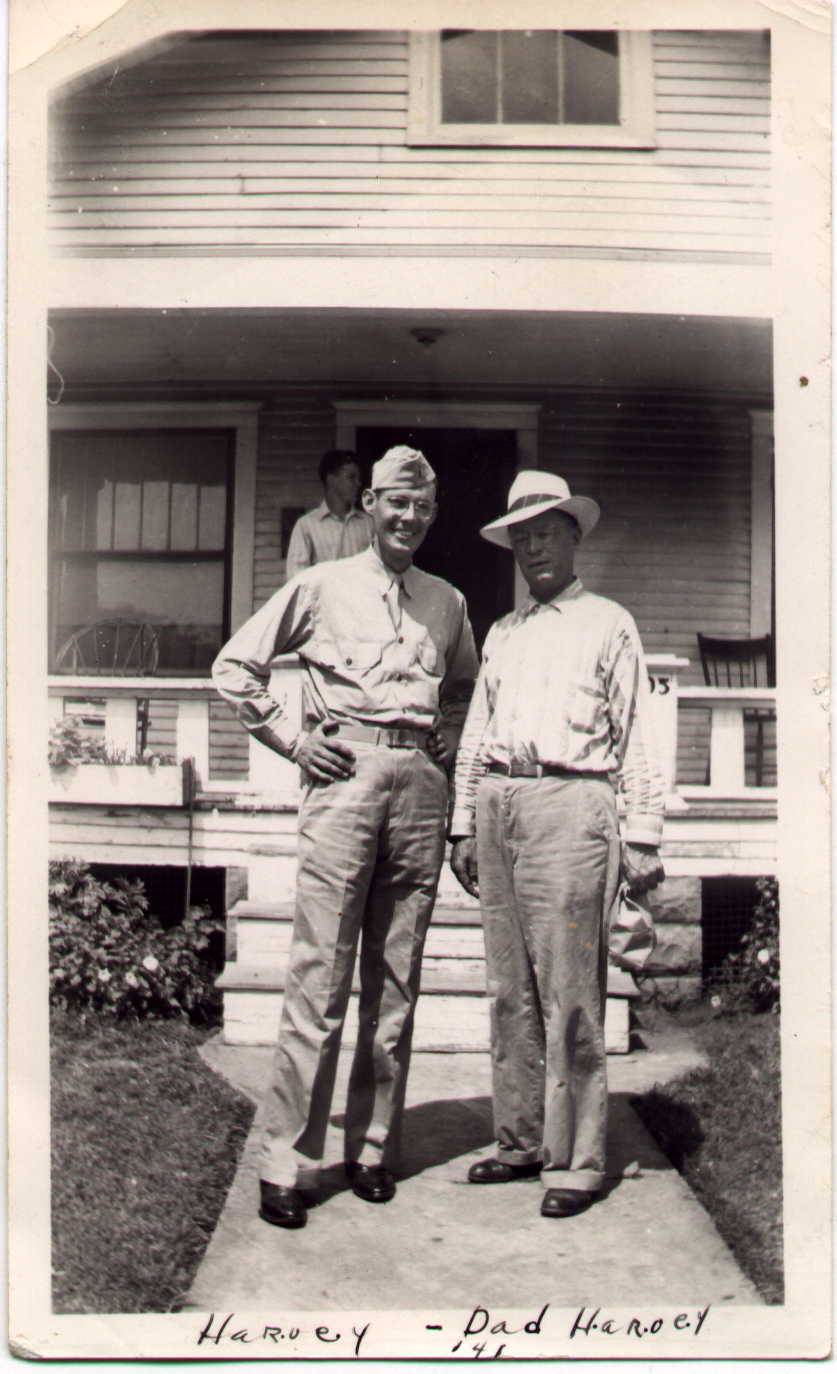
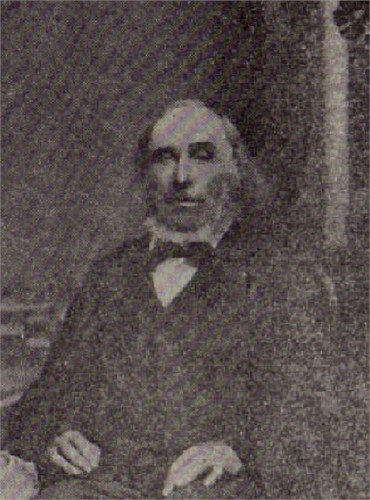
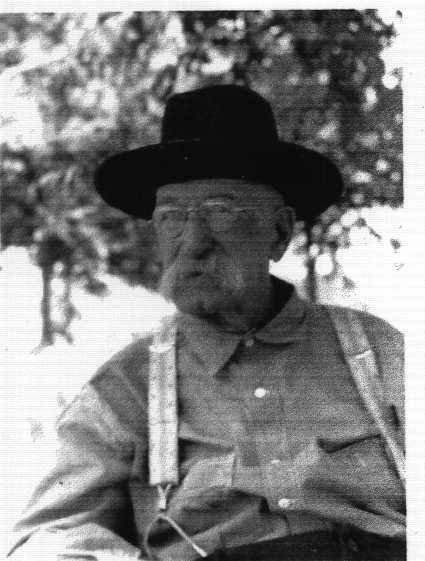
The men pictured here are my father, my grandfather, my great-grandfather, and his father.  You would have figured it out, but I didn’t want you to have any doubts.

Theodore La Moyne Harvey with his father, Theodore George Harvey (Wichita, KS-1941)


Isaac Martin Harvey (1818-1903)
George Washington Harvey (1853-1939)


George Washington Harvey, my great-grandfather, was born in Peoria County, Illinois in 1853.  His father, Isaac, was born in London in 1818.  Sometime around 1880, George W. brought his parents, Isaac and Sarah, to Afton Township in Sedgwick County, Kansas.  Like 90% of all Americans at that time, the Harvey’s were farmers.  (The Harvey homestead now forms the bottom of Lake Afton, southwest of Goddard.)

George W. was widowed in 1897.  Isaac died in 1903; Sarah in 1926.  With nine children, and with his parents living with him, George W. Harvey was, for many years, the head of a multi-generational farm household.

In 1900, that wasn’t unusual.  Back then, 57% of all Americans over age 65 lived in multi-generational households.  But then, a strange thing happened.  With the introduction of electrically driven machinery and gasoline powered engines, labor productivity, especially on the farm, improved dramatically.  The demand for farm labor, supplied primarily by children, fell off a cliff.  Naturally, “kin availability” for multi-generational household formation also fell.  The kids could and did leave home for jobs in nearby cities and towns.  Some even moved out of state.

Ordinary Americans prospered as never before.  Living in population centers, however small, they reaped the benefits of industrial capitalism’s spontaneously-ordered, division of labor, wealth-creating structure.  People acquired specialized knowledge and became highly skilled in those specialties.  They became more valuable to their employers and their communities, and to themselves.  The American economy became more diversified.  Opportunities multiplied. 

With the division of labor and skill specialization, people could earn more and save more.  They could invest more in the education of their children.  As they became more independent financially, they became more independent psychologically, as well.  This process was interrupted somewhat by The Great Depression, but the trends toward greater wealth, education, and mobility resumed with the end of WWII.  By 1990, only 17% of Americans over the age of 65 lived in multi-generational households. 

That trend away from multi-generational households, which lasted for most of the twentieth century, now seems to have reversed.  Today, 20% of all Americans over the age of 65 live in multi-generational households, up from 17% in 1990.  Why?

Probably, the single most important reason is a return of “kin availability”.  Yes, the kids still go away to college and they are more mobile than ever, but according to the U.S. Census Bureau, the population of the United States in 1900 was only 76 million.  Today, the Baby Boom Generation alone is bigger than that.  That’s a lot of people who are able, and often anxious, to accept their parents—even their grandparents—into their households.  Unlike the early twentieth century, most people are not tied to the land.  Almost everyone, not just the young, can relocate on relatively short notice.  Another important factor, of course, is longevity.  Ninety is the new normal. 

As you know, women, on average, live longer than men.  For many widowed ladies, the idea of living with the kids seems more agreeable than living alone.  Though there are fewer of them, elderly single men often prefer living with family, too.  It’s true that in their common quest for love or companionship, some of these older singles will find new soul-mates.  God bless them if they do; but few call out, and fewer are chosen. 

That brings me to a final, important point.  Supply and Demand.  In 1900, only 5.9% of Americans over age 65 lived alone.  Today, 17.9% do.  A lot of aging parents do not want to be alone or in long-term care facilities.  Many of their children are able, and some are willing, to accept them into their households.  That situation could continue for quite a long time, and it’s something that almost everyone needs to think about.  mh

Walk a Mile in Their Shoes

Originally Published in Flourishing July/August 2010

Born and raised in Oregon, Karl Marlantes was a National Merit Scholar, a graduate of Yale University, and a Rhodes Scholar at Oxford University. After finishing his education at Oxford, Karl served his country as a Marine combat officer. For his heroic action and leadership in Vietnam, Lt. Marlantes was awarded the Navy Cross, the Bronze Star, two Navy Commendation Medals for valor, two Purple Hearts, and ten air medals. Later, he built a successful career as a global energy analyst.

But, Karl Marlantes’ magnificent obsession, since 1975, has been to tell the truth about what happened in Vietnam. Now, after more than thirty years of writing, editing, rethinking and rewriting, and scores of rejection slips, Karl Marlantes has achieved his dream. His first book is a novel, but the story and its characters are based on Marlantes’ own experiences. He tells us the truth about Vietnam as it was seen and felt  on the ground by those who sweat, bled, and died. This book is not political; it’s as real and direct an experience of guerilla warfare as the written word can provide. It may offend your sensibilities, and it’s supposed to. Your heart may break. You may get angry. You may gain a new appreciation for those who served.

When I saw Karl Marlantes on CSPAN’s Book TV a few weeks ago, I knew that I would have to read his book. I owe it to those who served in Vietnam; in particular, Marine PFC Jerry Long, my good friend from Beloit, who was  killed by an NVA sniper on December 4, 1968. Jerry had planned to become a Catholic priest; instead—four months and five days into his tour of duty in Vietnam—he became a casualty of war.

Matterhorn: A Novel of the Vietnam War (Atlantic Monthly Press, 2010) is a must read for everyone who turned eighteen between 1961 and 1974, and for every child of a Vietnam War veteran. Our friends and fathers were so young and mostly scared, and yet they gave so much of themselves for each other and their country. At the very least, we owe them our understanding, and this book shows the way. mh

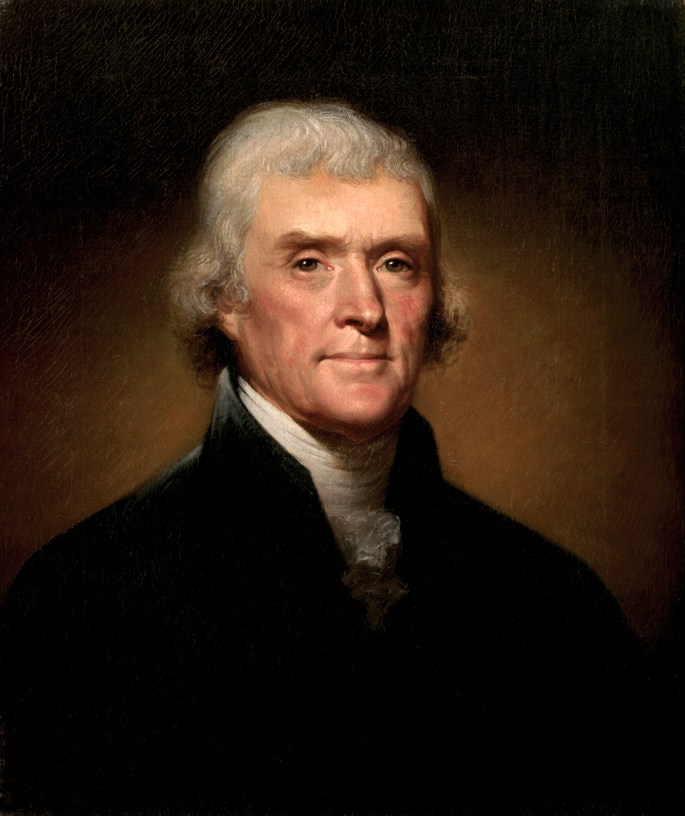
Jefferson’s First Principle of Association

Originally Published in Flourishing July/August 2010

“To take from one, because it is thought his own industry and that of his fathers has acquired too much, in order to spare to others, who, or whose fathers, have not exercised equal industry and skill, is to violate arbitrarily the first principle of association, the guarantee to everyone the free exercise of his industry and the fruits acquired by it.”  

—Thomas Jefferson, letter to Joseph Milligan, April 6, 1816.

Larry Summers served briefly as a Secretary of the Treasury under President Clinton, and later as President of Harvard University, where he got into trouble for inadvertently hinting that boys might have a greater natural aptitude for math and science than girls. He is now a key, behind-the-scenes economic advisor to President Obama, having lost out to Tim Geithner as Obama’s Treasury Secretary.

In a New York Times article, The Return of Larry Summers, published on November 26, 2008, David Leonhardt told his readers about one of Summers’ favorite economic arguments: Require every household in the top 1% of American income earners, who as a group have an average annual income of $1.7 million, to write a check for $800,000. This money could then be pooled and used to mail a $10,000 check to every household in the bottom 80 percent of income distribution, those making less than $120,0001.

Leonhardt’s story may only be symbolic, but it is instructive. I see several problems with Summers’ idea.

First is the fact that the $1.7 million is an average. Many households earning less than $500,000 are also in the top 1%. The threshold income to be in the top 1% was $410,096 in 2007, the latest year for which data is available2. Their tax rate would not be the roughly 47% envisioned by Mr. Summers; it would approach 195%. (It’s an important fact, too, that the makeup of the top 1% is constantly changing, as people with new ideas and special talents migrate from the lowest levels of income distribution to the top.)

Second, I believe that Mr. Summers is advocating government-sponsored armed robbery on a heroic scale. I suspect that many among the top 1% might resist having their earnings from whatever source – intellectual and artistic endeavors, business interests, professional practices, or investment, for example – snatched so imperiously. After all, does Summers’ proposal differ in any basic respect from private citizens taking the matter of income inequality into their own hands? It’s probably true that rich people won’t draw their six-shooters to defend their income from the government, but they might well vote with their feet. Talent and Capital tend to reside where they’re treated best.

Third, it’s widely known that Warren Buffett, the world’s third richest man, is very conservative in his personal spending habits, as was Sam Walton, the founder of Walmart.3 Those two may be exceptions of a sort, but the few hundred mansions, yachts, and airplanes belonging to others among the top 1% pale into insignificance alongside the total consumption of the general population. Moreover, a significant portion of the consumption of the wealthy, who are so often demonized as greedy fat-cats, takes the form of support for universities, hospitals, research facilities, theater and music companies, museums, libraries, and churches; to name just a few of their non-profit pursuits.4

Finally, contrary to the myth of conspicuous consumption, most of the wealth owned by the top 1% is held in the form of business, financial, and industrial assets.5 The wealthy and their productive capital can serve consumers throughout the world by producing a vast array of goods and services, or by financing that production, or by paying the wages, salaries, and benefits of a substantial percentage of America’s workforce. The intended beneficiaries of Summers’ scheme should already enjoy a magnificent range of benefits derived from the savings and investments of all Americans, including the invested wealth of those at the top.

I believe that widespread understanding of this issue is critical for America’s return to lasting prosperity; and that economists like Larry Summers and politicians like Barack Obama simply do not appreciate (or care?) that their redistribution policies may limit the formation of productive capital and the creation of well-paying, private-sector jobs. The history of forced wealth and income redistribution is replete with examples.6

In my opinion, Summers’ favorite economic argument does not really benefit the bottom 80%. Rather, forced redistribution of wealth and income consumes the savings and capital of America’s most productive citizens, or drives it and them offshore. My reading of history indicates that such policies have no lasting beneficiaries, only victims. And, most importantly, I believe Thomas Jefferson observed correctly that the forced redistribution of wealth and income is a first-order violation of human rights. mh

1 http://georgereismansblog.blogspot.com/.

2 http://www.ntu.org/tax-basics/who-pays-income-taxes.html.

3The World’s Billionaires, Forbes Fact and Comment, March 10, 2010. 

All the Money In the World, Peter Bernstein (editor), Knopf, 2007.

4 Caroline Bermudez, “Wealthy Are Making Bigger Gifts to Charitable Causes”, Chronicle of Philanthropy, July 1, 2010. (http://philanthropy.com/article/Wealthy-Are-Making-Bigger/66112/).

5http://sociology.ucsc.edu/whorulesamerica/power/wealth.html

6 The Ascent of Money: A Financial History of the World, Niall Ferguson, Penguin, 2009.