Blog

In Support of Tea Parties

Originally Published in Flourishing May/June 2010

Some of you will disagree with what I say in this article, including some members of my own family.  (But, Superman agrees with me.)  I tell you that to remind you of two things:  First, I have no partisan ax to grind.  My political hero is George Washington, and, unfortunately, he’s dead.  I’m interested in political philosophy, history, and economic science—not partisan politics.  Second, this newsletter is a labor of love, written with nothing but my clients’ interests in mind, and I think you deserve my honest opinion on issues that affect all of us.  Happily, the feedback I’ve received from clients over the years has been decidedly positive.  As always, agree or not, I thank you for your business.

Do you remember how people were outraged by the Bush/Paulson $700 billion bank bailout?  Or the $180 billion for AIG?  Or President Obama’s dismissive treatment of Chrysler bondholders and the auto industry takeovers?  Then, we saw the passage of an $800 billion stimulus package, with its litany of mostly irrational, hastily conceived supposedly shovel-ready projects.  In my opinion, this was all unnecessary and mainly helped a few politicians and their business associates, some influential labor unions, and state and local governments. 

Then there was the 2010 federal budget deficit of $1.4 trillion.  The national debt, which was 50% of the Gross Domestic Product (GDP) in 2008, will approach 80% of the GDP by 2012.  This program was sold primarily as a “jobs creation package”; yet, unemployment remains at nearly 10% of the American workforce.  (http://www.gpoaccess.gov/usbudget/fy10/pdf/hist.pdf)

Now we have Obamacare, with concern from some of the American people, using tactics that politicians used to their advantage.  It was uncomfortable for me to watch, as one legislator after another voted for this legislature.  It now seems likely that those 2700 pages will add at least $1 trillion, possibly $2 trillion, (who can really know?) to our nation’s debt.

Spending of this magnitude is unlike anything Americans have ever seen—allowing for the wartime spike of 1942 to 1945.  What scares people, I think, is that today’s spending doesn’t look like a spike; its shape is an asymptote to indigence.  In my opinion, this fiscal irresponsibility will diminish their freedom, their quality of life, and their children’s futures.  On the other hand . . .

The entrepreneurial spirit that defines America is too powerful to be swept away.  Many Americans take their responsibility for their won lives quite seriously.  They value their independence and the freedom to structure their lives as they see fit.  They resent being subject to policies created by opposing politicians and bureaucrats, and, if you please, to policies supported by people who expect to be taken care of by politicians and bureaucrats.  Some Americans are of an ambitious breed, not keen to trade self-determination and affluence for extended unemployment benefits and a healthcare queue. They do not want the government to run care companies, banks, or clinics.

Besides, the disparity between President Obama’s campaign promises and his governing style are now too apparent.  People expected transparency and tolerance, not duplicity and disdain.  The President and Robert Gibbs can slander the tea party movement, if they like, and at the risk of their own credibility; but I believe most tea-partiers are neither bullies nor bozos.  In fact, some surveys have shown that a majority—particularly the organizers—are well-educated women.  (http://volokh.com/2010/04/15/national-survey-of-tea-party-supporters–done-by-the-new-york-times-and-cbs-news/)  Nor are they Tim McVeigh types, as some have suggested; I see them as Patrick Henry types.  They’re our neighbors, driven by their dedication to freedom.  They know American history, and they respect our founders’ Constitution.  They are, for the most part, members of America’s honest, intelligent, and productive middle class.  As the Wall Street Journal has noted, when President Obama vilifies and denigrates those he’s elected to serve, he dishonor’s himself, not the targets of his invective. 

I’m confident that most Americans still have an inbred love for liberty.  Most take appropriate pride in their personal achievements.  Just look around, or better yet, in the mirror.  Then look at Greece, a European country where those who live on the dole outnumber productive citizens.  That country is quite literally bankrupt and it appears to me as if it’s the freeloaders who are taking to the streets to defend their nanny-state entitlements in violent demonstrations.  Some people worry that America is heading down that same path.  Maybe we are; but I don’t think so. 

Just consider this difference.  In America, it’s the producers who are taking to the streets, and peacefully so.  The tea party movement is a non-violent, grass-roots campaign for fiscal responsibility and a more limited government.  I think the tea parties foretell a dramatic and overdue return to America’s founding principles, and more prudent economic and fiscal policies from government at every level.  Mh

The above material reflects the opinions of Michael Harvey and not those of LPL Financial.
The Return of Kin Availability

Originally Published in Flourishing May/June 2010

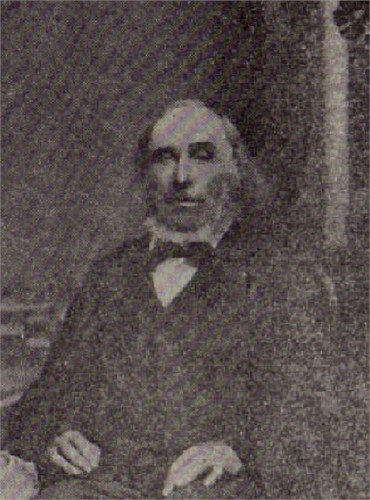
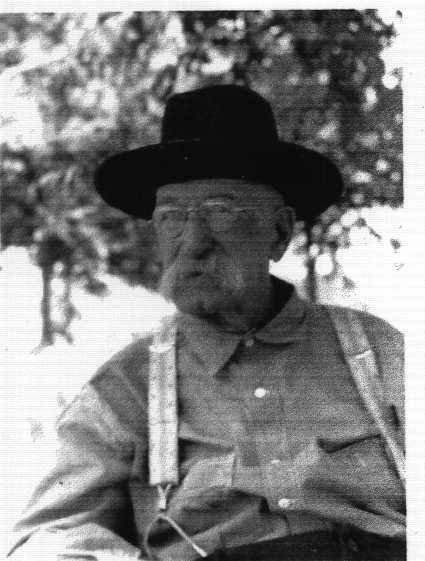
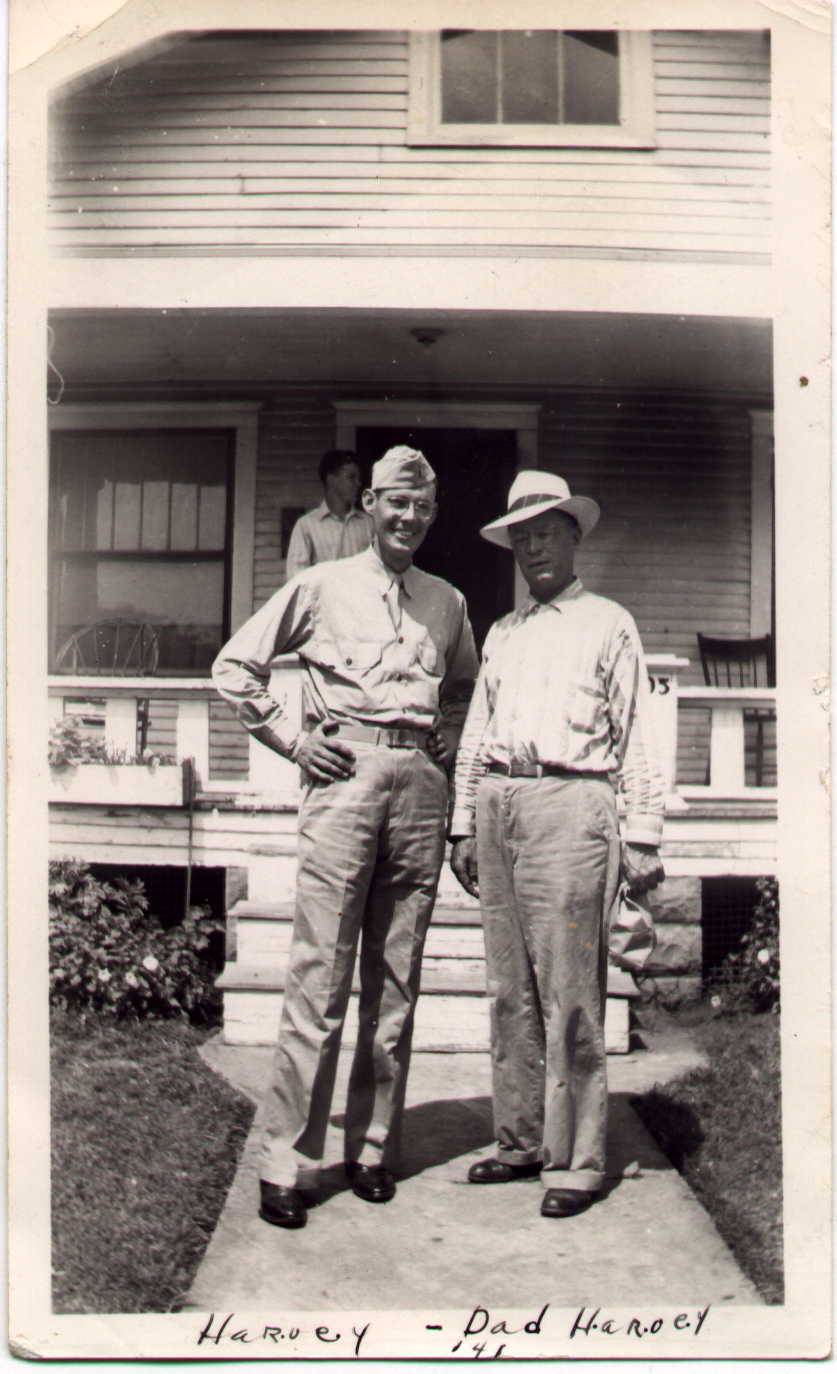
The men pictured here are my father, my grandfather, my great-grandfather, and his father.  You would have figured it out, but I didn’t want you to have any doubts.

Theodore La Moyne Harvey with his father, Theodore George Harvey (Wichita, KS-1941)


Isaac Martin Harvey (1818-1903)
George Washington Harvey (1853-1939)


George Washington Harvey, my great-grandfather, was born in Peoria County, Illinois in 1853.  His father, Isaac, was born in London in 1818.  Sometime around 1880, George W. brought his parents, Isaac and Sarah, to Afton Township in Sedgwick County, Kansas.  Like 90% of all Americans at that time, the Harvey’s were farmers.  (The Harvey homestead now forms the bottom of Lake Afton, southwest of Goddard.)

George W. was widowed in 1897.  Isaac died in 1903; Sarah in 1926.  With nine children, and with his parents living with him, George W. Harvey was, for many years, the head of a multi-generational farm household.

In 1900, that wasn’t unusual.  Back then, 57% of all Americans over age 65 lived in multi-generational households.  But then, a strange thing happened.  With the introduction of electrically driven machinery and gasoline powered engines, labor productivity, especially on the farm, improved dramatically.  The demand for farm labor, supplied primarily by children, fell off a cliff.  Naturally, “kin availability” for multi-generational household formation also fell.  The kids could and did leave home for jobs in nearby cities and towns.  Some even moved out of state.

Ordinary Americans prospered as never before.  Living in population centers, however small, they reaped the benefits of industrial capitalism’s spontaneously-ordered, division of labor, wealth-creating structure.  People acquired specialized knowledge and became highly skilled in those specialties.  They became more valuable to their employers and their communities, and to themselves.  The American economy became more diversified.  Opportunities multiplied. 

With the division of labor and skill specialization, people could earn more and save more.  They could invest more in the education of their children.  As they became more independent financially, they became more independent psychologically, as well.  This process was interrupted somewhat by The Great Depression, but the trends toward greater wealth, education, and mobility resumed with the end of WWII.  By 1990, only 17% of Americans over the age of 65 lived in multi-generational households. 

That trend away from multi-generational households, which lasted for most of the twentieth century, now seems to have reversed.  Today, 20% of all Americans over the age of 65 live in multi-generational households, up from 17% in 1990.  Why?

Probably, the single most important reason is a return of “kin availability”.  Yes, the kids still go away to college and they are more mobile than ever, but according to the U.S. Census Bureau, the population of the United States in 1900 was only 76 million.  Today, the Baby Boom Generation alone is bigger than that.  That’s a lot of people who are able, and often anxious, to accept their parents—even their grandparents—into their households.  Unlike the early twentieth century, most people are not tied to the land.  Almost everyone, not just the young, can relocate on relatively short notice.  Another important factor, of course, is longevity.  Ninety is the new normal. 

As you know, women, on average, live longer than men.  For many widowed ladies, the idea of living with the kids seems more agreeable than living alone.  Though there are fewer of them, elderly single men often prefer living with family, too.  It’s true that in their common quest for love or companionship, some of these older singles will find new soul-mates.  God bless them if they do; but few call out, and fewer are chosen. 

That brings me to a final, important point.  Supply and Demand.  In 1900, only 5.9% of Americans over age 65 lived alone.  Today, 17.9% do.  A lot of aging parents do not want to be alone or in long-term care facilities.  Many of their children are able, and some are willing, to accept them into their households.  That situation could continue for quite a long time, and it’s something that almost everyone needs to think about.  mh

Walk a Mile in Their Shoes

Originally Published in Flourishing July/August 2010

Born and raised in Oregon, Karl Marlantes was a National Merit Scholar, a graduate of Yale University, and a Rhodes Scholar at Oxford University. After finishing his education at Oxford, Karl served his country as a Marine combat officer. For his heroic action and leadership in Vietnam, Lt. Marlantes was awarded the Navy Cross, the Bronze Star, two Navy Commendation Medals for valor, two Purple Hearts, and ten air medals. Later, he built a successful career as a global energy analyst.

But, Karl Marlantes’ magnificent obsession, since 1975, has been to tell the truth about what happened in Vietnam. Now, after more than thirty years of writing, editing, rethinking and rewriting, and scores of rejection slips, Karl Marlantes has achieved his dream. His first book is a novel, but the story and its characters are based on Marlantes’ own experiences. He tells us the truth about Vietnam as it was seen and felt  on the ground by those who sweat, bled, and died. This book is not political; it’s as real and direct an experience of guerilla warfare as the written word can provide. It may offend your sensibilities, and it’s supposed to. Your heart may break. You may get angry. You may gain a new appreciation for those who served.

When I saw Karl Marlantes on CSPAN’s Book TV a few weeks ago, I knew that I would have to read his book. I owe it to those who served in Vietnam; in particular, Marine PFC Jerry Long, my good friend from Beloit, who was  killed by an NVA sniper on December 4, 1968. Jerry had planned to become a Catholic priest; instead—four months and five days into his tour of duty in Vietnam—he became a casualty of war.

Matterhorn: A Novel of the Vietnam War (Atlantic Monthly Press, 2010) is a must read for everyone who turned eighteen between 1961 and 1974, and for every child of a Vietnam War veteran. Our friends and fathers were so young and mostly scared, and yet they gave so much of themselves for each other and their country. At the very least, we owe them our understanding, and this book shows the way. mh

Jefferson’s First Principle of Association

Originally Published in Flourishing July/August 2010

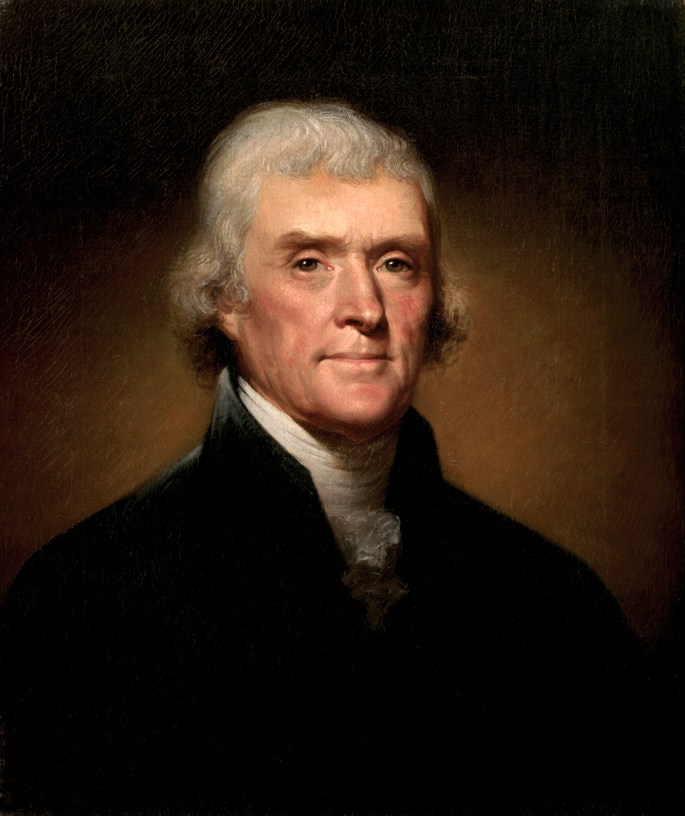
“To take from one, because it is thought his own industry and that of his fathers has acquired too much, in order to spare to others, who, or whose fathers, have not exercised equal industry and skill, is to violate arbitrarily the first principle of association, the guarantee to everyone the free exercise of his industry and the fruits acquired by it.”  

—Thomas Jefferson, letter to Joseph Milligan, April 6, 1816.

Larry Summers served briefly as a Secretary of the Treasury under President Clinton, and later as President of Harvard University, where he got into trouble for inadvertently hinting that boys might have a greater natural aptitude for math and science than girls. He is now a key, behind-the-scenes economic advisor to President Obama, having lost out to Tim Geithner as Obama’s Treasury Secretary.

In a New York Times article, The Return of Larry Summers, published on November 26, 2008, David Leonhardt told his readers about one of Summers’ favorite economic arguments: Require every household in the top 1% of American income earners, who as a group have an average annual income of $1.7 million, to write a check for $800,000. This money could then be pooled and used to mail a $10,000 check to every household in the bottom 80 percent of income distribution, those making less than $120,0001.

Leonhardt’s story may only be symbolic, but it is instructive. I see several problems with Summers’ idea.

First is the fact that the $1.7 million is an average. Many households earning less than $500,000 are also in the top 1%. The threshold income to be in the top 1% was $410,096 in 2007, the latest year for which data is available2. Their tax rate would not be the roughly 47% envisioned by Mr. Summers; it would approach 195%. (It’s an important fact, too, that the makeup of the top 1% is constantly changing, as people with new ideas and special talents migrate from the lowest levels of income distribution to the top.)

Second, I believe that Mr. Summers is advocating government-sponsored armed robbery on a heroic scale. I suspect that many among the top 1% might resist having their earnings from whatever source – intellectual and artistic endeavors, business interests, professional practices, or investment, for example – snatched so imperiously. After all, does Summers’ proposal differ in any basic respect from private citizens taking the matter of income inequality into their own hands? It’s probably true that rich people won’t draw their six-shooters to defend their income from the government, but they might well vote with their feet. Talent and Capital tend to reside where they’re treated best.

Third, it’s widely known that Warren Buffett, the world’s third richest man, is very conservative in his personal spending habits, as was Sam Walton, the founder of Walmart.3 Those two may be exceptions of a sort, but the few hundred mansions, yachts, and airplanes belonging to others among the top 1% pale into insignificance alongside the total consumption of the general population. Moreover, a significant portion of the consumption of the wealthy, who are so often demonized as greedy fat-cats, takes the form of support for universities, hospitals, research facilities, theater and music companies, museums, libraries, and churches; to name just a few of their non-profit pursuits.4

Finally, contrary to the myth of conspicuous consumption, most of the wealth owned by the top 1% is held in the form of business, financial, and industrial assets.5 The wealthy and their productive capital can serve consumers throughout the world by producing a vast array of goods and services, or by financing that production, or by paying the wages, salaries, and benefits of a substantial percentage of America’s workforce. The intended beneficiaries of Summers’ scheme should already enjoy a magnificent range of benefits derived from the savings and investments of all Americans, including the invested wealth of those at the top.

I believe that widespread understanding of this issue is critical for America’s return to lasting prosperity; and that economists like Larry Summers and politicians like Barack Obama simply do not appreciate (or care?) that their redistribution policies may limit the formation of productive capital and the creation of well-paying, private-sector jobs. The history of forced wealth and income redistribution is replete with examples.6

In my opinion, Summers’ favorite economic argument does not really benefit the bottom 80%. Rather, forced redistribution of wealth and income consumes the savings and capital of America’s most productive citizens, or drives it and them offshore. My reading of history indicates that such policies have no lasting beneficiaries, only victims. And, most importantly, I believe Thomas Jefferson observed correctly that the forced redistribution of wealth and income is a first-order violation of human rights. mh

1 http://georgereismansblog.blogspot.com/.

2 http://www.ntu.org/tax-basics/who-pays-income-taxes.html.

3The World’s Billionaires, Forbes Fact and Comment, March 10, 2010. 

All the Money In the World, Peter Bernstein (editor), Knopf, 2007.

4 Caroline Bermudez, “Wealthy Are Making Bigger Gifts to Charitable Causes”, Chronicle of Philanthropy, July 1, 2010. (http://philanthropy.com/article/Wealthy-Are-Making-Bigger/66112/).

5http://sociology.ucsc.edu/whorulesamerica/power/wealth.html

6 The Ascent of Money: A Financial History of the World, Niall Ferguson, Penguin, 2009.

The Virtue of Saving vs. J.M. Keynes

Originally Published in Flourishing July/August 2010

“If the Treasury were to fill old bottles with banknotes, bury them at suitable depths in disused coal mines which are then filled up to the surface with town rubbish, and leave it to private enterprise on the well-tried principles of laissez-faire to dig up the notes again (the right to do so being obtained, of course, by tendering for leases of the note-bearing territory), there would be no more unemployment,…the real income of the community, and its capital wealth also, would probably become a good deal greater than it actually is.”

—John Maynard Keynes, The General Theory of Employment, Interest, and Money, Great Minds Series, Prometheus Books, 1997, p 129.

The term “Keynesianism” is in the news, and several of you have asked me, in effect, “What is Keynesianism?” Sadly, the answer is embedded in the nonsense quoted above, but the question deserves a more definitive response.

Keynes was a British subject who lived from 1883 to 1946. The work cited above was first published in New York City by Harcourt, Brace, and World in 1936. Keynesianism is the economic school of thought derived from Keynes’ work, as developed in his “General Theory”. It’s in the news because it’s the economic policy of the Obama administration and the current Congress, e.g. “stimulus” spending, financed by new government debt.

The fundamental aspect, then, of a Keynesian “stimulus package” is the government’s deficit-financing of consumer spending and make-work projects. Keynesians assume that this will cause an increase in employment and production as a way of replacing what is consumed by the stimulus spending. In some degree that may be true; just as consuming one’s savings and acquiring more debt may motivate an individual to seek a second job. I believe the bankruptcy courts might show that’s generally not a good plan.

Our representatives in Washington perennially promise to avoid wasteful spending, but from the point of view of Keynesianism, the bigger the make-work project, the better. That was made clear by Keynes himself in the citation above. And, he continued on the same page with this little gem: “Pyramid-building, earthquakes, and even wars may serve to increase wealth.” If that’s all true, the BP oil spill, along with a good hurricane, should serve to enrich the gulf coast. And, instead of filling up coal mines with bottles of banknotes, we should spend “stimulus” money on today’s equivalent: “green jobs”.

Sarcasm aside, what the economic system really needs for recovery – whether from natural disasters, industrial accidents, or a severe economic recession – is saving and the accumulation of new capital, not deficit spending and make-work projects. In the wake of the housing and mortgage meltdown, new saving and capital accumulation could replace the financial capacity that was lost through the mal-investments of homeowners, homebuilders, banks and other financial institutions. Savings and capital accumulation represent money that can be put to work by businesses (large and small), producing goods and services that meet the real wants and needs of consumers. It’s in that process that real new jobs are created. It’s my opinion that the virtuous cycle of job-creation and prosperity begins with saving (not spending):

Saving leads to capital accumulation, which leads to greater productive capacity—including the creation of productive jobs—which leads to more consumer choice, which leads to more consumer spending and the satisfaction of individual wants and needs, which leads to business profits, which leads to saving and capital accumulation, etc.

Antithetically, Keynesianism—as history and logic have repeatedly shown—destroys savings and capital investment through deficit-financed government spending.* mh

* George Reisman, Keynesianism: A Critique, Capitalism: A Treatise on Economics, Chapter 18, pp 863-894,   Jameson  Books, 1996.

Washington’s Purposeful Will

Originally published in eFlourishing Issue 34, October 27, 2010.

I’ve just recently joined a professional development collaborative led by John A. Warnick, founder and CEO of the Purposeful Planning Institute, based in Denver. John A. was formerly a partner in the Denver office of Holme Roberts & Owen LLP, a prestigious international law firm.

The Purposeful Planning Institute provides its collaborators with weekly and monthly conference calls and regular on-site training sessions at varying locations around the country. I expect to add to my understanding of issues related to intergenerational wealth transfer from this collaborative, and I hope to translate what I learn into practical benefits for clients.

This week, though, I just want to share something I gained from a personal telephone conversation with John A., and from my membership in the Purposeful Planning Institute collaborative.

George Washington – my great-grandfather’s namesake – has taken a lot of heat over the past couple of decades – despite his indispensable role in America’s founding – because, it is alleged, he didn’t free his own slaves. In response to that line of thinking, I’ve always said that the man deserves immeasurable credit for helping to lay the foundation for the actions of Abraham Lincoln and others, who are more widely recognized for their advancement of civil rights equality. And, I’ve said, you have to give a man his historical context.

So, I was delighted to learn about Washington’s 16-page, handwritten will. You can go online and google it for yourself, but here, thanks to John A. Warnick, is a transcript of the relevant portion.

Upon the decease of my wife, it is my Will & desire that all the Slaves which I hold in my own right shall receive their freedom. —To emancipate them during her life, would, tho’ earnestly wished by me, be attended with such insuperable difficulties…And whereas among those who will receive freedome according to this devise, there may be some, who from old age or bodily infirmities, and others who on account of their infancy, that will be unable to support themselves; it is my Will and desire that all…shall be comfortably cloathed & fed by my heirs while they live; —…And I do expressly forbid the Sale, or transportation out of the said Commonwealth, of any Slave I may die possessed of, under any pretence whatsoever. —And I do most pointedly, and most solemnly enjoin upon my Executors…to see that this clause respecting Slaves…be religiously fulfilled.

Washington went on to establish a trust fund for the establishment of a free school for educating the children of poor and indigent slaves.

Isn’t it amazing what I didn’t learn in school? Until next week,

PATIENCE, DISCIPLINE, and CONFIDENCE in the FUTURE! Mh

 John A. Warnick and Purposeful Planning Institute are not affiliated with, nor endorsed by, LPL Financial. 

Thank you, Dr. Lindzen

Originally Published in eFlourishing Issue 6, March 2, 2010

Over the past twenty plus years, Dr. Richard Lindzen has been one of the scientists most maligned by the global warming orthodoxy. Dr. Lindzen, an atmospheric physicist, is the Alfred P. Sloan Professor of Meteorology at MIT. Naturally, that qualification didn’t prevent his being labeled (should I say libeled?) as a “global warming denier” and an “oil industry puppet” by global warming alarmists. Incidentally, I don’t feel either of those charges are true. More to the point of this essay, Dr. Lindzen’s criticisms of the global warming establishment are now being vindicated, albeit ever so quietly in the media.

One very good example of Dr. Lindzen’s long-standing concerns is a paper written for the Cato Institute, published in the Spring 1992 issue of their periodical, Regulation. The title of the article was Global Warming: The Origin and Nature of the Alleged Scientific Consensus.

My favorite line from that 14-page report is this matter-of-fact statement in the first paragraph:

I must state at the outset, that, as a scientist, I can find no substantive basis for the warming scenarios being popularly described. Moreover, according to many studies I have read by economists, agronomists, and hydrologists, there would be little difficulty adapting to such warming if it were to occur.

Dr. Lindzen goes on to acknowledge a substantial increase in CO2 levels over the past two hundred years. He then discusses popular misunderstandings of the “greenhouse effect” and the contribution of CO2 according to his research.  For example:

The main absorbers of infrared in the atmosphere are water vapor and clouds. Even if all other greenhouse gases (such as carbon dioxide and methane) were to disappear, we would still be left with over 98% of the current greenhouse effect.

He discusses the science of atmospheric temperature variation – and lack thereof – at some length, but comes to the crux of the current problem in a section entitled Consensus and the Current “Popular Vision” (quotes in the original):

The growth of environmental advocacy since the 1970’s has been phenomenal. In Europe the movement centered on the formation of Green parties; in the United States the movement centered on the development of large public interest advocacy groups. Those lobbying groups have budgets of several hundred million dollars and employ about 50,000 people; their support is highly valued by political figures. As with any large groups, self-perpetuation becomes a crucial concern. “Global Warming” has become one of the major battle cries in their fundraising efforts. At the same time, the media unquestionably accept the pronouncements of those groups as objective truth. 

Dr. Lindzen then offers several pages of examples of highly qualified, but skeptical, scientists being denied funding for their climate science research and/or being denied the opportunity to publish their findings. He then asks,

Why, one might wonder, is there such insistence on scientific uniformity on the warming issue? After all, unanimity in science is virtually non-existent on far less complex matters. …Biologists and physicians are rarely asked to endorse some theory in high energy physics. Apparently, when one comes to “global warming”, any scientist’s agreement will do. The answer almost certainly lies in politics.

As to the motivation of the global warming alarmists, Dr. Lindzen quotes former Berkeley professor of political science, Dr. Aaron Wildavsky:

Warming (and warming alone), through its primary antidote of withdrawing carbon from production and consumption, is capable of realizing the environmentalist’s dream of an egalitarian society based on the rejection of economic growth in favor of a smaller population’s eating lower on the food chain, consuming a lot less, and sharing a much lower level of resources much more equally.

Dr. Lindzen does have a sense of humor about the environmentalist lobby’s proposed diminutions of human progress:

In many ways Wildavsky’s observation does not go far enough. The point is that carbon dioxide is vitally central to industry, transportation, modern life, and life in general. It has been joked that carbon dioxide controls would permit us to inhale as much as we wish; only exhaling would be controlled.

In my opinion, the end of the global warming hysteria is near, if not at hand. Cap and trade – the death of industry tax on carbon emissions – is itself all but dead.  A year ago that measure seemed almost sure to pass through Congress and become the law of the land. It was supported not just by Obama, Reed, and Pelosi, et al, but by such notable republicans as John McCain and Lindsay Graham.

It is my sincerest hope that scientists like Dr. Richard Lindzen will finally be recognized for their beliefs. If there is such a thing as a Galileo Galilei Prize for Scientific Integrity, I feel Dr. Richard Lindzen is among the most deserving.

Recommended Reading

Originally Published in eFlourishing Issue 8, March 16, 2010

Michel Grandin was ten years old when he saw the plane go down on June 10, 1944. It had been strafing a German convoy, when the pilot apparently misjudged the height of an approaching tree line – one of those infamous and ancient hedgerows of Normandy.

 Michel’s father forbade him to run to the crash site, though he, a local carpenter, and the village priest did so. While these French patriots waited in the nearby woods, German soldiers policed the scene of the crash, taking the pilot’s identification and a few pieces of the wreckage of ConJon IV, a magnificent, scarlet-nosed P-51 aircraft. Later that night, Michel’s father and the priest recovered and took care of the pilot’s body, prepared a casket, and held a private funeral service. They buried Conrad J – the only name they knew to give him – in their church cemetery.

Katherine Henderson was born in 1923. She graduated from the most beautiful high school in the nation (according to Life Magazine) in 1940. She married Conrad John Netting, III in 1943. Within a year of the wedding, Katherine was a widow. Her only child, Conrad Netting, IV was born in San Antonio, Texas just one month after his father died in France.

That’s about all I can write through damp eyes. You’ll have to read Delayed Legacy* by Conrad John Netting, IV – and I sincerely hope you will. In it you will meet the most generous and elegant people of Saint-Michel-des-Andaines, and of San Antonio, Texas, too.

*Delayed Legacy, Conrad John Netting, IV, Maverick Publishing, San Antonio, 2005.

Governed by Principles, Not Gangs

Originally Published in Flourishing November 2010

Once again, we approach the end of silly-season, that time in our lives when politicians excuse themselves of responsibility for their screw-ups, and renew their promises to make everything right. What irritates me about elections, though, is that our candidate choices seem to know very little about our nation’s history or its fundamental founding principles.

Perhaps this time it will be different, but recent history doesn’t offer a lot of hope. According to former President Bill Clinton, the right to vote is “the most fundamental right of citizenship”. John McCain says that the right to vote is “the heart and soul of our democracy.”  Seems innocent.

In fact, voting is an important responsibility of citizenship, because it is our last best defense against tyranny. But, it is not the most fundamental right of citizenship, and democracy is not the essential aspect of our government.

I think Jefferson meant something like that when he said, “All, too, will bear in mind this sacred principle, that though the will of the majority is in all cases to prevail, that will to be rightful must be reasonable; that the minority possess their equal rights, which equal law must protect, and to violate would be oppression.”  The relative size of its gang doesn’t give any political party the right to abuse the minority, any minority.

I’m quite certain that Jefferson wasn’t referring to minorities only in the sense of race or ethnicity. He was, rather, including the smallest minority of all, the individual.

 As you go to the polls this election day, remember that what makes America unique in all of human history is not that it has elections. Iran has elections. Our task as citizens and voters—especially this year—is not just to choose which gang will be in charge of government institutions. It is to renew our commitment to liberty, and to remind all of our elected officials that our elections take place in a country–our country—whose government is limited by the sacred principle of individual rights. mh

Made in the USA

Originally Published in eFlourishing Issue 8, March 16, 2010

We hear our friends say, “The US doesn’t make anything here anymore!”

But we do. Last Thursday, the Commerce Department announced that as a percentage (39%) of the growth in our Gross Domestic Product (5.9% in 4Q2009), goods exported from the US hit a thirteen-year high in 4Q2009. But wait! That’s not the good news, which is that the US is still – far and away – the number one manufacturer in the world, producing more than 20% of global output in 2009. China was number two at 12%, Japan was number three at 10%, Germany was number four at 7%, and no other country contributed more than 4% of global manufacturing output. (All data from “Made in America”, LPL Weekly Market Commentary by Jeffrey Kleintop dated March 15, 2010)

Just look at what we produce. While China produces toys and Japan produces cameras, the US produces and exports technical and machine tools, medical equipment, computer software, pharmaceuticals, commercial airplanes, defense products, satellites, and myriad other high-value-per-unit products.

Let others have their cheap labor. These high-value-per unit products tell us that our most important comparative advantages are a prodigious pool of intellectual talent and an ocean of invested capital – each the result of two hundred years under a (relatively free) capitalist system. Our comparative advantages are not easily duplicated. I believe our greatest threats are not overseas sweat shops and call centers, but restrictions of free trade and government-enforced price controls. Sorry; I do digress.

Old Europe and Japan are stuck in the muck of semi-socialism, as fourth quarter annualized Gross Domestic Product was less than 1%.  Will they ever learn? More than 50% of US exports go to emerging markets. Yes, China is an emerging market, but so are Brazil and India. Those are among the many countries we sell to that are experiencing high economic growth rates. We do want prosperous customers, do we not? (All data from “Made in America”, LPL Weekly Market Commentary by Jeffrey Kleintop, CFA dated March 15, 2010)

Here is the best news for investors: The S&P 500 companies derive more than 40% of their revenue from global markets. (“Made in America”, LPL Weekly Market Commentary by Jeffrey Kleintop, CFA date March 15, 2010)  According to LPL Research, American business sectors with the highest rate of export-driven sales are – not surprisingly – Information Technology, Industrials, Materials, and Energy.

Despite Europe’s problems and our own currently high unemployment rate, The Global Capitalist Revolution is still growing – and in the long run – I feel it cannot be stopped. In my opinion, American manufacturing will remain an important contributor to worldwide economic progress and rising living standards for American workers.